
Go back

Communication

3 Ps of Public Speaking

Why the 3 Ps of Public Speaking Are Important for Every Speaker

The 3 Ps of public speaking are the foundation of confident and effective communication, yet many people ignore them and struggle with stage fear, poor delivery, and unclear messaging. If you are looking for tips to become a better speaker, understanding these three principles can completely change how you present yourself.

The problem is simple. Most people focus only on what to say, not how to say it. This leads to nervousness, weak communication, and lack of audience engagement.

The solution lies in mastering Preparation, Practice, and Performance. These three elements help you organize your thoughts, deliver clearly, and connect with your audience effectively. This guide will show you how to use the 3 Ps of public speaking to improve your communication skills.

What Are the 3 Ps of Public Speaking?

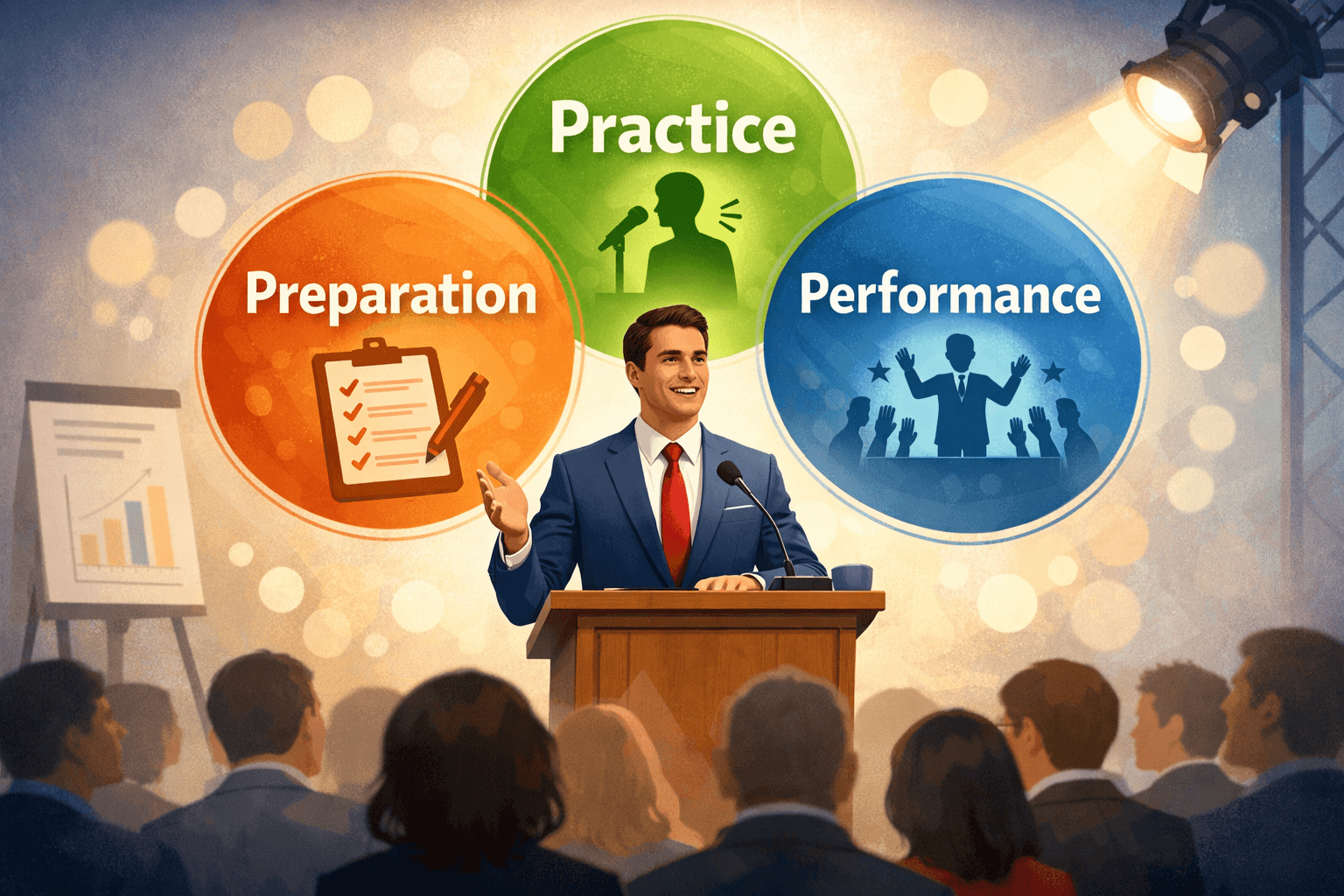
The 3 Ps of public speaking stand for:

  • Preparation

  • Practice

  • Performance

These three elements form a structured approach to speaking confidently in any situation.

Preparation helps you organize your content. Practice improves your delivery. Performance ensures you connect with your audience.

When combined, they create a complete communication system.

How the 3 Ps Improve Communication Skills

The 3 Ps of public speaking improve communication by bringing structure and clarity to your speech.

They help you:

  • Organize your thoughts clearly

  • Improve verbal communication skills

  • Build confidence

  • Enhance audience engagement

  • Deliver impactful messages

To deepen your understanding, you can explore key principles of effective communication, which align closely with these concepts.

Why the 3 Ps of Public Speaking Matter

Public speaking is not just about speaking. It is about delivering value and creating impact.

The 3 Ps matter because they:

  • Reduce stage fear

  • Improve speech delivery

  • Build strong stage presence

  • Increase confidence

  • Help maintain audience attention

Without these principles, even knowledgeable speakers struggle to communicate effectively.

Common Public Speaking Mistakes to Avoid



Many people fail in public speaking due to simple mistakes.

Common errors include:

  • Lack of preparation

  • Speaking too fast

  • Avoiding eye contact

  • Poor body language

  • Not engaging the audience

Avoiding these mistakes is the first step toward becoming a confident speaker.

The First P: Preparation in Public Speaking

Preparation is the most important part of the 3 Ps of public speaking.

It involves:

  • Understanding your topic

  • Structuring your content

  • Knowing your audience

  • Defining your key message

Good preparation reduces anxiety and improves clarity.

It also helps you deliver your speech with confidence because you know exactly what to say.

The Second P: Practice for Confident Delivery

Practice transforms preparation into confidence.

It helps you:

  • Improve speech delivery techniques

  • Control voice modulation

  • Refine body language

  • Reduce hesitation

Effective ways to practice include:

  • Rehearsing in front of a mirror

  • Recording your speech

  • Practicing with friends

If you want to improve consistently, you can learn communication skills with a structured course and build strong speaking habits.

The Third P: Performance and Audience Engagement

Performance is where everything comes together.

It focuses on:

  • Engaging the audience

  • Using eye contact

  • Managing stage presence

  • Delivering with confidence

Strong performance creates a connection with your audience.

It ensures your message is not just heard but remembered.

Tips to Master the 3 Ps of Public Speaking

To master the 3 Ps of public speaking, follow these practical tips:

  • Keep your message simple and clear

  • Focus on one key idea

  • Use real examples

  • Maintain proper body language

  • Engage your audience with questions

Consistency is the key to improvement.

How to Build Confidence as a Speaker

Confidence does not come instantly. It develops over time with practice and experience.

To build confidence:

  • Start with small audiences

  • Practice regularly

  • Accept mistakes as part of learning

  • Focus on improvement, not perfection

You can also work on your delivery by learning how to develop clear and confident speaking skills through structured techniques.

Benefits of Effective Public Speaking Skills

Strong public speaking skills offer long-term benefits.

They help you:

  • Improve communication skills

  • Build leadership presence

  • Perform better in professional settings

  • Influence and inspire others

  • Grow in your career

Public speaking is a valuable skill in almost every field.

How the 3 Ps Support Career Growth

Mastering the 3 Ps of public speaking can significantly impact your career.

It allows you to:

  • Present ideas confidently

  • Lead meetings effectively

  • Communicate with clarity

  • Build professional relationships

If you want to continue improving, you can also check out all available courses to strengthen your communication and leadership skills.

Conclusion

The 3 Ps of public speaking provide a simple but powerful framework for improving communication.

Preparation helps you organize your ideas. Practice builds confidence. Performance ensures effective delivery.

By applying these principles consistently, you can overcome stage fear, improve communication, and become a confident speaker.

Start practicing today and take your communication skills to the next level.

FAQs

1. What are the 3 Ps of public speaking?

The 3 Ps stand for Preparation, Practice, and Performance.

2. Why are the 3 Ps important for effective communication?

They help structure your speech, improve delivery, and enhance audience engagement.

3. How does preparation improve public speaking skills?

Preparation helps organize content and reduces anxiety.

4. What role does practice play in public speaking?

Practice improves confidence, clarity, and delivery.

5. How can performance impact audience engagement?

Good performance helps connect with the audience and keeps them engaged.

6. What are common public speaking mistakes?

Lack of preparation, poor body language, and weak delivery.

7. How can beginners improve their speaking confidence?

Start small, practice regularly, and focus on improvement.

8. What techniques help reduce stage fear?

Preparation, practice, and controlled breathing.

9. How can communication skills improve public speaking?

Strong communication skills make your message clear and impactful.

10. Can public speaking skills help in career growth?

Yes, they improve leadership, confidence, and professional communication.


If you want updates Please check our social Media

If you want updates Please check our social Media

If you want updates Please check our social Media

If you want updates Please check our social Media

Go back

Communication

3 Ps of Public Speaking

Why the 3 Ps of Public Speaking Are Important for Every Speaker

The 3 Ps of public speaking are the foundation of confident and effective communication, yet many people ignore them and struggle with stage fear, poor delivery, and unclear messaging. If you are looking for tips to become a better speaker, understanding these three principles can completely change how you present yourself.

The problem is simple. Most people focus only on what to say, not how to say it. This leads to nervousness, weak communication, and lack of audience engagement.

The solution lies in mastering Preparation, Practice, and Performance. These three elements help you organize your thoughts, deliver clearly, and connect with your audience effectively. This guide will show you how to use the 3 Ps of public speaking to improve your communication skills.

What Are the 3 Ps of Public Speaking?

The 3 Ps of public speaking stand for:

  • Preparation

  • Practice

  • Performance

These three elements form a structured approach to speaking confidently in any situation.

Preparation helps you organize your content. Practice improves your delivery. Performance ensures you connect with your audience.

When combined, they create a complete communication system.

How the 3 Ps Improve Communication Skills

The 3 Ps of public speaking improve communication by bringing structure and clarity to your speech.

They help you:

  • Organize your thoughts clearly

  • Improve verbal communication skills

  • Build confidence

  • Enhance audience engagement

  • Deliver impactful messages

To deepen your understanding, you can explore key principles of effective communication, which align closely with these concepts.

Why the 3 Ps of Public Speaking Matter

Public speaking is not just about speaking. It is about delivering value and creating impact.

The 3 Ps matter because they:

  • Reduce stage fear

  • Improve speech delivery

  • Build strong stage presence

  • Increase confidence

  • Help maintain audience attention

Without these principles, even knowledgeable speakers struggle to communicate effectively.

Common Public Speaking Mistakes to Avoid


Many people fail in public speaking due to simple mistakes.

Common errors include:

  • Lack of preparation

  • Speaking too fast

  • Avoiding eye contact

  • Poor body language

  • Not engaging the audience

Avoiding these mistakes is the first step toward becoming a confident speaker.

The First P: Preparation in Public Speaking

Preparation is the most important part of the 3 Ps of public speaking.

It involves:

  • Understanding your topic

  • Structuring your content

  • Knowing your audience

  • Defining your key message

Good preparation reduces anxiety and improves clarity.

It also helps you deliver your speech with confidence because you know exactly what to say.

The Second P: Practice for Confident Delivery

Practice transforms preparation into confidence.

It helps you:

  • Improve speech delivery techniques

  • Control voice modulation

  • Refine body language

  • Reduce hesitation

Effective ways to practice include:

  • Rehearsing in front of a mirror

  • Recording your speech

  • Practicing with friends

If you want to improve consistently, you can learn communication skills with a structured course and build strong speaking habits.

The Third P: Performance and Audience Engagement

Performance is where everything comes together.

It focuses on:

  • Engaging the audience

  • Using eye contact

  • Managing stage presence

  • Delivering with confidence

Strong performance creates a connection with your audience.

It ensures your message is not just heard but remembered.

Tips to Master the 3 Ps of Public Speaking

To master the 3 Ps of public speaking, follow these practical tips:

  • Keep your message simple and clear

  • Focus on one key idea

  • Use real examples

  • Maintain proper body language

  • Engage your audience with questions

Consistency is the key to improvement.

How to Build Confidence as a Speaker

Confidence does not come instantly. It develops over time with practice and experience.

To build confidence:

  • Start with small audiences

  • Practice regularly

  • Accept mistakes as part of learning

  • Focus on improvement, not perfection

You can also work on your delivery by learning how to develop clear and confident speaking skills through structured techniques.

Benefits of Effective Public Speaking Skills

Strong public speaking skills offer long-term benefits.

They help you:

  • Improve communication skills

  • Build leadership presence

  • Perform better in professional settings

  • Influence and inspire others

  • Grow in your career

Public speaking is a valuable skill in almost every field.

How the 3 Ps Support Career Growth

Mastering the 3 Ps of public speaking can significantly impact your career.

It allows you to:

  • Present ideas confidently

  • Lead meetings effectively

  • Communicate with clarity

  • Build professional relationships

If you want to continue improving, you can also check out all available courses to strengthen your communication and leadership skills.

Conclusion

The 3 Ps of public speaking provide a simple but powerful framework for improving communication.

Preparation helps you organize your ideas. Practice builds confidence. Performance ensures effective delivery.

By applying these principles consistently, you can overcome stage fear, improve communication, and become a confident speaker.

Start practicing today and take your communication skills to the next level.

FAQs

1. What are the 3 Ps of public speaking?

The 3 Ps stand for Preparation, Practice, and Performance.

2. Why are the 3 Ps important for effective communication?

They help structure your speech, improve delivery, and enhance audience engagement.

3. How does preparation improve public speaking skills?

Preparation helps organize content and reduces anxiety.

4. What role does practice play in public speaking?

Practice improves confidence, clarity, and delivery.

5. How can performance impact audience engagement?

Good performance helps connect with the audience and keeps them engaged.

6. What are common public speaking mistakes?

Lack of preparation, poor body language, and weak delivery.

7. How can beginners improve their speaking confidence?

Start small, practice regularly, and focus on improvement.

8. What techniques help reduce stage fear?

Preparation, practice, and controlled breathing.

9. How can communication skills improve public speaking?

Strong communication skills make your message clear and impactful.

10. Can public speaking skills help in career growth?

Yes, they improve leadership, confidence, and professional communication.


If you want updates Please check our social Media

If you want updates Please check our social Media

If you want updates Please check our social Media

If you want updates Please check our social Media

Go back

Communication

3 Ps of Public Speaking

Why the 3 Ps of Public Speaking Are Important for Every Speaker

The 3 Ps of public speaking are the foundation of confident and effective communication, yet many people ignore them and struggle with stage fear, poor delivery, and unclear messaging. If you are looking for tips to become a better speaker, understanding these three principles can completely change how you present yourself.

The problem is simple. Most people focus only on what to say, not how to say it. This leads to nervousness, weak communication, and lack of audience engagement.

The solution lies in mastering Preparation, Practice, and Performance. These three elements help you organize your thoughts, deliver clearly, and connect with your audience effectively. This guide will show you how to use the 3 Ps of public speaking to improve your communication skills.

What Are the 3 Ps of Public Speaking?

The 3 Ps of public speaking stand for:

  • Preparation

  • Practice

  • Performance

These three elements form a structured approach to speaking confidently in any situation.

Preparation helps you organize your content. Practice improves your delivery. Performance ensures you connect with your audience.

When combined, they create a complete communication system.

How the 3 Ps Improve Communication Skills

The 3 Ps of public speaking improve communication by bringing structure and clarity to your speech.

They help you:

  • Organize your thoughts clearly

  • Improve verbal communication skills

  • Build confidence

  • Enhance audience engagement

  • Deliver impactful messages

To deepen your understanding, you can explore key principles of effective communication, which align closely with these concepts.

Why the 3 Ps of Public Speaking Matter

Public speaking is not just about speaking. It is about delivering value and creating impact.

The 3 Ps matter because they:

  • Reduce stage fear

  • Improve speech delivery

  • Build strong stage presence

  • Increase confidence

  • Help maintain audience attention

Without these principles, even knowledgeable speakers struggle to communicate effectively.

Common Public Speaking Mistakes to Avoid


Many people fail in public speaking due to simple mistakes.

Common errors include:

  • Lack of preparation

  • Speaking too fast

  • Avoiding eye contact

  • Poor body language

  • Not engaging the audience

Avoiding these mistakes is the first step toward becoming a confident speaker.

The First P: Preparation in Public Speaking

Preparation is the most important part of the 3 Ps of public speaking.

It involves:

  • Understanding your topic

  • Structuring your content

  • Knowing your audience

  • Defining your key message

Good preparation reduces anxiety and improves clarity.

It also helps you deliver your speech with confidence because you know exactly what to say.

The Second P: Practice for Confident Delivery

Practice transforms preparation into confidence.

It helps you:

  • Improve speech delivery techniques

  • Control voice modulation

  • Refine body language

  • Reduce hesitation

Effective ways to practice include:

  • Rehearsing in front of a mirror

  • Recording your speech

  • Practicing with friends

If you want to improve consistently, you can learn communication skills with a structured course and build strong speaking habits.

The Third P: Performance and Audience Engagement

Performance is where everything comes together.

It focuses on:

  • Engaging the audience

  • Using eye contact

  • Managing stage presence

  • Delivering with confidence

Strong performance creates a connection with your audience.

It ensures your message is not just heard but remembered.

Tips to Master the 3 Ps of Public Speaking

To master the 3 Ps of public speaking, follow these practical tips:

  • Keep your message simple and clear

  • Focus on one key idea

  • Use real examples

  • Maintain proper body language

  • Engage your audience with questions

Consistency is the key to improvement.

How to Build Confidence as a Speaker

Confidence does not come instantly. It develops over time with practice and experience.

To build confidence:

  • Start with small audiences

  • Practice regularly

  • Accept mistakes as part of learning

  • Focus on improvement, not perfection

You can also work on your delivery by learning how to develop clear and confident speaking skills through structured techniques.

Benefits of Effective Public Speaking Skills

Strong public speaking skills offer long-term benefits.

They help you:

  • Improve communication skills

  • Build leadership presence

  • Perform better in professional settings

  • Influence and inspire others

  • Grow in your career

Public speaking is a valuable skill in almost every field.

How the 3 Ps Support Career Growth

Mastering the 3 Ps of public speaking can significantly impact your career.

It allows you to:

  • Present ideas confidently

  • Lead meetings effectively

  • Communicate with clarity

  • Build professional relationships

If you want to continue improving, you can also check out all available courses to strengthen your communication and leadership skills.

Conclusion

The 3 Ps of public speaking provide a simple but powerful framework for improving communication.

Preparation helps you organize your ideas. Practice builds confidence. Performance ensures effective delivery.

By applying these principles consistently, you can overcome stage fear, improve communication, and become a confident speaker.

Start practicing today and take your communication skills to the next level.

FAQs

1. What are the 3 Ps of public speaking?

The 3 Ps stand for Preparation, Practice, and Performance.

2. Why are the 3 Ps important for effective communication?

They help structure your speech, improve delivery, and enhance audience engagement.

3. How does preparation improve public speaking skills?

Preparation helps organize content and reduces anxiety.

4. What role does practice play in public speaking?

Practice improves confidence, clarity, and delivery.

5. How can performance impact audience engagement?

Good performance helps connect with the audience and keeps them engaged.

6. What are common public speaking mistakes?

Lack of preparation, poor body language, and weak delivery.

7. How can beginners improve their speaking confidence?

Start small, practice regularly, and focus on improvement.

8. What techniques help reduce stage fear?

Preparation, practice, and controlled breathing.

9. How can communication skills improve public speaking?

Strong communication skills make your message clear and impactful.

10. Can public speaking skills help in career growth?

Yes, they improve leadership, confidence, and professional communication.


If you want updates Please check
our social Media

If you want updates Please check
our social Media

If you want updates Please check
our social Media

If you want updates Please check
our social Media