

Identifying the right startup AI ideas is the first step toward building a category-defining company in India’s rapidly evolving digital economy. As we approach 2026, the initial hype surrounding basic chatbots has cooled, making way for sophisticated, industry-specific applications. For entrepreneurs, founders, and innovators, this period represents a "golden window" where the underlying infrastructure of artificial intelligence is stable enough to build upon, yet niche markets remain wide open for disruption.
At Webveda, we believe that the next wave of Indian unicorns will not just use AI—they will be built natively on it. Whether you are a solo founder or an aspiring tech leader, understanding where the technology is heading is essential for long-term success.
Why Are AI Startups Dominating the Entrepreneurial Landscape?
The shift toward AI entrepreneurship opportunities is driven by a fundamental change in how software is built. Traditionally, software followed rigid rules; today, machine learning allows systems to learn from data and adapt. This shift has made AI-driven business models more attractive to investors because they offer superior defensibility and higher margins.
In the Indian context, the startup ecosystem is uniquely positioned to lead. With a massive pool of engineering talent and a growing appetite for intelligent automation solutions, Indian startups are moving beyond simple service exports to creating proprietary deep learning solutions.
The dominance of AI is further accelerated by:
Reduced barrier to entry: Access to high-performance cloud computing and open-source models.
Predictive capabilities: The ability for predictive analytics startups to forecast consumer behavior with high accuracy.
Scalability: Unlike traditional businesses, AI-powered SaaS platforms can scale globally with minimal incremental costs.
Generative AI Business Ideas for Content and Creativity
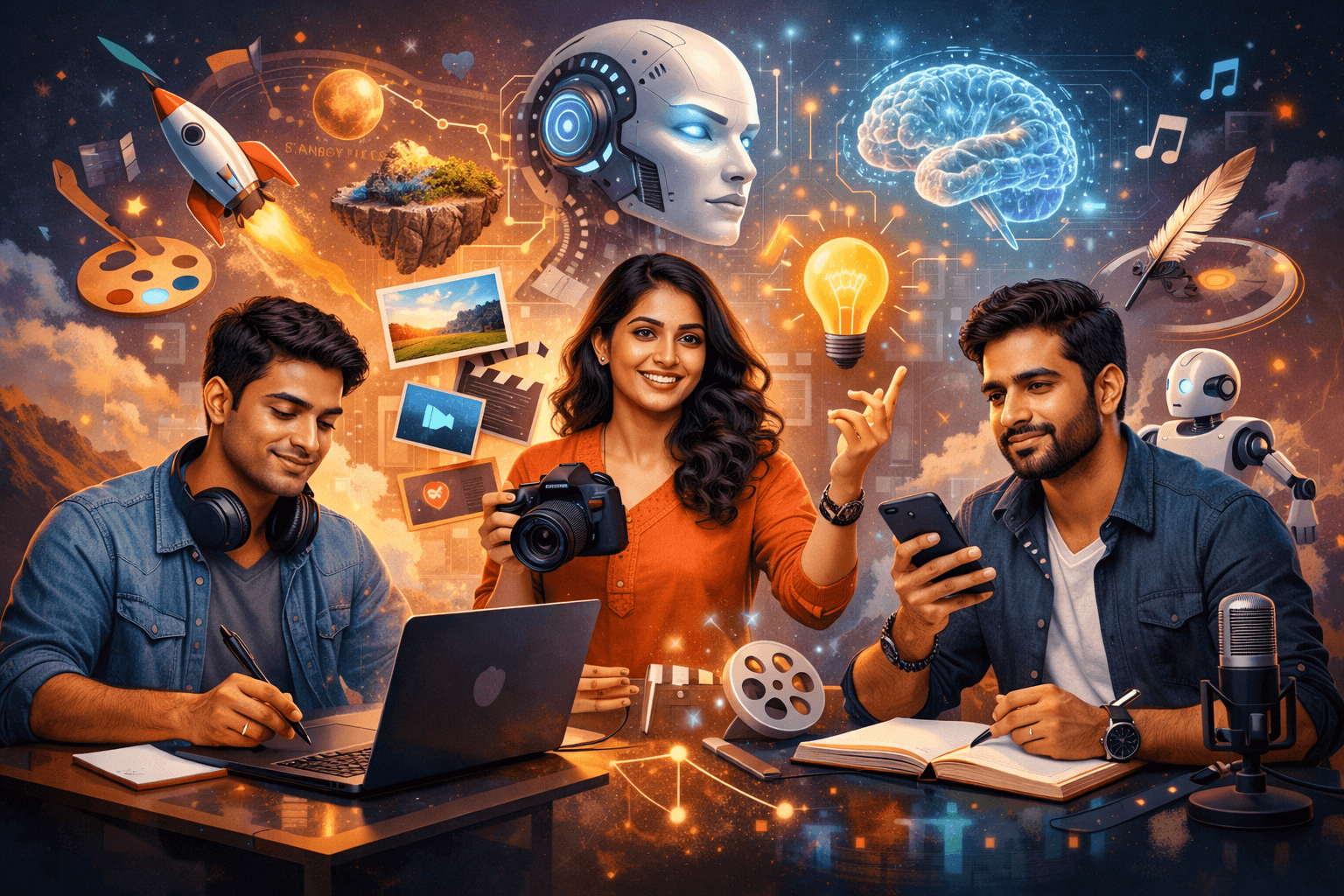
While the first wave of generative AI applications focused on simple text generation, the next frontier is hyper-personalization and multimodal content creation.
1. Automated Video Localization for Indian Languages
India has dozens of major languages and hundreds of dialects. A startup that uses AI to not only translate but also "lip-sync" and culturally adapt marketing videos could revolutionize how brands communicate. This is one of the most practical machine learning business ideas for the Indian market.
2. AI-Driven Product Photography
E-commerce sellers often struggle with high studio costs. An AI-based mobile application that allows sellers to take a basic photo of a product and instantly generate a high-end, professional lifestyle shoot using neural networks would see immediate adoption.
3. Hyper-Personalized Education Platforms
Generic courses are being replaced by adaptive learning paths. By integrating AI, a comprehensive startup course can adjust its difficulty level and examples based on the learner's real-time performance.
How to Validate and Test Your AI Startup Idea
Validation is the bridge between a "cool project" and a viable business. Many founders fail because they build complex technology before confirming market demand.
The MVP Approach: Start with a "Wizard of Oz" MVP. This means the front end looks like AI, but the back-end tasks are performed manually or with simple scripts to see if customers actually value the output.
Data Availability: Ensure you have access to the proprietary data needed to train or fine-tune your models. Without unique data, your startup lacks a "moat."
Problem-Solution Fit: Don't lead with the tech. Lead with the problem. Ask yourself: Does this solve a "hair-on-fire" problem for a specific niche?
Ready to shift from idea to execution? Adopting a proven building a business in India can cut through months of trial and error, giving you a clear path to validate, build, and scale with confidence.
Challenges and Ethical Considerations in AI Startups
Building an AI startup isn't without its hurdles. Beyond the technical complexities, founders must navigate a landscape of evolving regulations and ethical concerns.
Data Privacy and Security: With the Digital Personal Data Protection (DPDP) Act in India, startups must be meticulous about how they collect and process user information.
Algorithm Bias: If your training data is biased, your AI will be too. This is particularly sensitive in sectors like fintech or recruitment.
Intellectual Property: Determining who owns AI-generated content remains a legal grey area. Founders should consult a legal startup compliance guide to protect their core assets early on.
Funding and Scaling AI Startups in a Competitive Market
Scaling an AI business requires a different strategy than traditional SaaS. Your AI monetization strategies must account for the high cost of GPU compute and data acquisition.
Scaling Strategies
To grow sustainably, focus on a startup scaling roadmap that prioritizes unit economics.
Freemium Models: Allow users to experience the "magic" of your AI before charging.
API-First Models: Sell your intelligence as a service to other businesses.
Vertical Integration: Solve the entire problem for a specific industry (e.g., AI for Legal or AI for Agriculture).
Managing Capital
Efficiency is key. Many founders are now focusing on reducing initial business costs by using pre-trained models rather than building from scratch. This allows for a more scalable AI business model that attracts venture capital by showing high capital efficiency.
FAQ
What are the best startup AI ideas for 2026?
The best ideas involve "Vertical AI"—applying AI to specific industries like healthcare diagnostics, legal document automation, and hyper-local Indian language translation services.
How do I start an AI startup with no technical background?
Focus on being a "domain expert." Partner with a technical co-founder or use no-code AI tools to build a prototype. Understanding the business problem is often more valuable than writing the code.
Are AI startups profitable in the long term?
Yes, provided they move beyond thin wrappers around existing models. Long-term profitability comes from proprietary data, high switching costs, and efficient AI-powered SaaS platforms.
Which industries offer the biggest AI startup opportunities?
Education, healthcare, fintech, and supply chain logistics in India are ripe for AI disruption due to massive data volumes and existing inefficiencies.
How much funding do AI startups require?
While research-heavy startups require millions, an application-layer AI startup can often launch a pilot with minimal capital by leveraging existing APIs and cloud credits.
What skills are needed to launch an AI startup?
A mix of data literacy, product management, prompt engineering, and a deep understanding of customer pain points.
How can I validate an AI startup idea?
Talk to 20 potential customers. If they are willing to pay for a manual version of your solution, they will likely pay for the automated AI version.
What are the risks of starting an AI-based business?
Key risks include high compute costs, rapid technological obsolescence, and potential regulatory changes regarding data usage.
Can small businesses benefit from AI startup solutions?
Absolutely. Most successful AI startups build tools specifically to help small businesses automate repetitive tasks like bookkeeping, customer support, and social media management.
What trends will shape AI entrepreneurship in the future?
Expect a shift toward "Edge AI" (running models locally on devices), autonomous agents that perform tasks without human intervention, and increased focus on AI transparency and explainability.
Conclusion
The landscape of future tech startups is being rewritten in real time. To succeed, you need more than just a vision; you need a structured approach to building and scaling. Whether you are refining your predictive analytics startups or launching a new creative tool, the foundation you build today will determine your position in the 2026 market.
Are you ready to turn your concept into a market-leading company? Explore our resources at Webveda to master the nuances of the Indian startup ecosystem and launch your startup AI ideas with confidence.
Recent Posts:
Identifying the right startup AI ideas is the first step toward building a category-defining company in India’s rapidly evolving digital economy. As we approach 2026, the initial hype surrounding basic chatbots has cooled, making way for sophisticated, industry-specific applications. For entrepreneurs, founders, and innovators, this period represents a "golden window" where the underlying infrastructure of artificial intelligence is stable enough to build upon, yet niche markets remain wide open for disruption.
At Webveda, we believe that the next wave of Indian unicorns will not just use AI—they will be built natively on it. Whether you are a solo founder or an aspiring tech leader, understanding where the technology is heading is essential for long-term success.
Why Are AI Startups Dominating the Entrepreneurial Landscape?
The shift toward AI entrepreneurship opportunities is driven by a fundamental change in how software is built. Traditionally, software followed rigid rules; today, machine learning allows systems to learn from data and adapt. This shift has made AI-driven business models more attractive to investors because they offer superior defensibility and higher margins.
In the Indian context, the startup ecosystem is uniquely positioned to lead. With a massive pool of engineering talent and a growing appetite for intelligent automation solutions, Indian startups are moving beyond simple service exports to creating proprietary deep learning solutions.
The dominance of AI is further accelerated by:
Reduced barrier to entry: Access to high-performance cloud computing and open-source models.
Predictive capabilities: The ability for predictive analytics startups to forecast consumer behavior with high accuracy.
Scalability: Unlike traditional businesses, AI-powered SaaS platforms can scale globally with minimal incremental costs.
Generative AI Business Ideas for Content and Creativity

While the first wave of generative AI applications focused on simple text generation, the next frontier is hyper-personalization and multimodal content creation.
1. Automated Video Localization for Indian Languages
India has dozens of major languages and hundreds of dialects. A startup that uses AI to not only translate but also "lip-sync" and culturally adapt marketing videos could revolutionize how brands communicate. This is one of the most practical machine learning business ideas for the Indian market.
2. AI-Driven Product Photography
E-commerce sellers often struggle with high studio costs. An AI-based mobile application that allows sellers to take a basic photo of a product and instantly generate a high-end, professional lifestyle shoot using neural networks would see immediate adoption.
3. Hyper-Personalized Education Platforms
Generic courses are being replaced by adaptive learning paths. By integrating AI, a comprehensive startup course can adjust its difficulty level and examples based on the learner's real-time performance.
How to Validate and Test Your AI Startup Idea
Validation is the bridge between a "cool project" and a viable business. Many founders fail because they build complex technology before confirming market demand.
The MVP Approach: Start with a "Wizard of Oz" MVP. This means the front end looks like AI, but the back-end tasks are performed manually or with simple scripts to see if customers actually value the output.
Data Availability: Ensure you have access to the proprietary data needed to train or fine-tune your models. Without unique data, your startup lacks a "moat."
Problem-Solution Fit: Don't lead with the tech. Lead with the problem. Ask yourself: Does this solve a "hair-on-fire" problem for a specific niche?
Ready to shift from idea to execution? Adopting a proven building a business in India can cut through months of trial and error, giving you a clear path to validate, build, and scale with confidence.
Challenges and Ethical Considerations in AI Startups
Building an AI startup isn't without its hurdles. Beyond the technical complexities, founders must navigate a landscape of evolving regulations and ethical concerns.
Data Privacy and Security: With the Digital Personal Data Protection (DPDP) Act in India, startups must be meticulous about how they collect and process user information.
Algorithm Bias: If your training data is biased, your AI will be too. This is particularly sensitive in sectors like fintech or recruitment.
Intellectual Property: Determining who owns AI-generated content remains a legal grey area. Founders should consult a legal startup compliance guide to protect their core assets early on.
Funding and Scaling AI Startups in a Competitive Market
Scaling an AI business requires a different strategy than traditional SaaS. Your AI monetization strategies must account for the high cost of GPU compute and data acquisition.
Scaling Strategies
To grow sustainably, focus on a startup scaling roadmap that prioritizes unit economics.
Freemium Models: Allow users to experience the "magic" of your AI before charging.
API-First Models: Sell your intelligence as a service to other businesses.
Vertical Integration: Solve the entire problem for a specific industry (e.g., AI for Legal or AI for Agriculture).
Managing Capital
Efficiency is key. Many founders are now focusing on reducing initial business costs by using pre-trained models rather than building from scratch. This allows for a more scalable AI business model that attracts venture capital by showing high capital efficiency.
FAQ
What are the best startup AI ideas for 2026?
The best ideas involve "Vertical AI"—applying AI to specific industries like healthcare diagnostics, legal document automation, and hyper-local Indian language translation services.
How do I start an AI startup with no technical background?
Focus on being a "domain expert." Partner with a technical co-founder or use no-code AI tools to build a prototype. Understanding the business problem is often more valuable than writing the code.
Are AI startups profitable in the long term?
Yes, provided they move beyond thin wrappers around existing models. Long-term profitability comes from proprietary data, high switching costs, and efficient AI-powered SaaS platforms.
Which industries offer the biggest AI startup opportunities?
Education, healthcare, fintech, and supply chain logistics in India are ripe for AI disruption due to massive data volumes and existing inefficiencies.
How much funding do AI startups require?
While research-heavy startups require millions, an application-layer AI startup can often launch a pilot with minimal capital by leveraging existing APIs and cloud credits.
What skills are needed to launch an AI startup?
A mix of data literacy, product management, prompt engineering, and a deep understanding of customer pain points.
How can I validate an AI startup idea?
Talk to 20 potential customers. If they are willing to pay for a manual version of your solution, they will likely pay for the automated AI version.
What are the risks of starting an AI-based business?
Key risks include high compute costs, rapid technological obsolescence, and potential regulatory changes regarding data usage.
Can small businesses benefit from AI startup solutions?
Absolutely. Most successful AI startups build tools specifically to help small businesses automate repetitive tasks like bookkeeping, customer support, and social media management.
What trends will shape AI entrepreneurship in the future?
Expect a shift toward "Edge AI" (running models locally on devices), autonomous agents that perform tasks without human intervention, and increased focus on AI transparency and explainability.
Conclusion
The landscape of future tech startups is being rewritten in real time. To succeed, you need more than just a vision; you need a structured approach to building and scaling. Whether you are refining your predictive analytics startups or launching a new creative tool, the foundation you build today will determine your position in the 2026 market.
Are you ready to turn your concept into a market-leading company? Explore our resources at Webveda to master the nuances of the Indian startup ecosystem and launch your startup AI ideas with confidence.
Recent Posts:
Identifying the right startup AI ideas is the first step toward building a category-defining company in India’s rapidly evolving digital economy. As we approach 2026, the initial hype surrounding basic chatbots has cooled, making way for sophisticated, industry-specific applications. For entrepreneurs, founders, and innovators, this period represents a "golden window" where the underlying infrastructure of artificial intelligence is stable enough to build upon, yet niche markets remain wide open for disruption.
At Webveda, we believe that the next wave of Indian unicorns will not just use AI—they will be built natively on it. Whether you are a solo founder or an aspiring tech leader, understanding where the technology is heading is essential for long-term success.
Why Are AI Startups Dominating the Entrepreneurial Landscape?
The shift toward AI entrepreneurship opportunities is driven by a fundamental change in how software is built. Traditionally, software followed rigid rules; today, machine learning allows systems to learn from data and adapt. This shift has made AI-driven business models more attractive to investors because they offer superior defensibility and higher margins.
In the Indian context, the startup ecosystem is uniquely positioned to lead. With a massive pool of engineering talent and a growing appetite for intelligent automation solutions, Indian startups are moving beyond simple service exports to creating proprietary deep learning solutions.
The dominance of AI is further accelerated by:
Reduced barrier to entry: Access to high-performance cloud computing and open-source models.
Predictive capabilities: The ability for predictive analytics startups to forecast consumer behavior with high accuracy.
Scalability: Unlike traditional businesses, AI-powered SaaS platforms can scale globally with minimal incremental costs.
Generative AI Business Ideas for Content and Creativity

While the first wave of generative AI applications focused on simple text generation, the next frontier is hyper-personalization and multimodal content creation.
1. Automated Video Localization for Indian Languages
India has dozens of major languages and hundreds of dialects. A startup that uses AI to not only translate but also "lip-sync" and culturally adapt marketing videos could revolutionize how brands communicate. This is one of the most practical machine learning business ideas for the Indian market.
2. AI-Driven Product Photography
E-commerce sellers often struggle with high studio costs. An AI-based mobile application that allows sellers to take a basic photo of a product and instantly generate a high-end, professional lifestyle shoot using neural networks would see immediate adoption.
3. Hyper-Personalized Education Platforms
Generic courses are being replaced by adaptive learning paths. By integrating AI, a comprehensive startup course can adjust its difficulty level and examples based on the learner's real-time performance.
How to Validate and Test Your AI Startup Idea
Validation is the bridge between a "cool project" and a viable business. Many founders fail because they build complex technology before confirming market demand.
The MVP Approach: Start with a "Wizard of Oz" MVP. This means the front end looks like AI, but the back-end tasks are performed manually or with simple scripts to see if customers actually value the output.
Data Availability: Ensure you have access to the proprietary data needed to train or fine-tune your models. Without unique data, your startup lacks a "moat."
Problem-Solution Fit: Don't lead with the tech. Lead with the problem. Ask yourself: Does this solve a "hair-on-fire" problem for a specific niche?
Ready to shift from idea to execution? Adopting a proven building a business in India can cut through months of trial and error, giving you a clear path to validate, build, and scale with confidence.
Challenges and Ethical Considerations in AI Startups
Building an AI startup isn't without its hurdles. Beyond the technical complexities, founders must navigate a landscape of evolving regulations and ethical concerns.
Data Privacy and Security: With the Digital Personal Data Protection (DPDP) Act in India, startups must be meticulous about how they collect and process user information.
Algorithm Bias: If your training data is biased, your AI will be too. This is particularly sensitive in sectors like fintech or recruitment.
Intellectual Property: Determining who owns AI-generated content remains a legal grey area. Founders should consult a legal startup compliance guide to protect their core assets early on.
Funding and Scaling AI Startups in a Competitive Market
Scaling an AI business requires a different strategy than traditional SaaS. Your AI monetization strategies must account for the high cost of GPU compute and data acquisition.
Scaling Strategies
To grow sustainably, focus on a startup scaling roadmap that prioritizes unit economics.
Freemium Models: Allow users to experience the "magic" of your AI before charging.
API-First Models: Sell your intelligence as a service to other businesses.
Vertical Integration: Solve the entire problem for a specific industry (e.g., AI for Legal or AI for Agriculture).
Managing Capital
Efficiency is key. Many founders are now focusing on reducing initial business costs by using pre-trained models rather than building from scratch. This allows for a more scalable AI business model that attracts venture capital by showing high capital efficiency.
FAQ
What are the best startup AI ideas for 2026?
The best ideas involve "Vertical AI"—applying AI to specific industries like healthcare diagnostics, legal document automation, and hyper-local Indian language translation services.
How do I start an AI startup with no technical background?
Focus on being a "domain expert." Partner with a technical co-founder or use no-code AI tools to build a prototype. Understanding the business problem is often more valuable than writing the code.
Are AI startups profitable in the long term?
Yes, provided they move beyond thin wrappers around existing models. Long-term profitability comes from proprietary data, high switching costs, and efficient AI-powered SaaS platforms.
Which industries offer the biggest AI startup opportunities?
Education, healthcare, fintech, and supply chain logistics in India are ripe for AI disruption due to massive data volumes and existing inefficiencies.
How much funding do AI startups require?
While research-heavy startups require millions, an application-layer AI startup can often launch a pilot with minimal capital by leveraging existing APIs and cloud credits.
What skills are needed to launch an AI startup?
A mix of data literacy, product management, prompt engineering, and a deep understanding of customer pain points.
How can I validate an AI startup idea?
Talk to 20 potential customers. If they are willing to pay for a manual version of your solution, they will likely pay for the automated AI version.
What are the risks of starting an AI-based business?
Key risks include high compute costs, rapid technological obsolescence, and potential regulatory changes regarding data usage.
Can small businesses benefit from AI startup solutions?
Absolutely. Most successful AI startups build tools specifically to help small businesses automate repetitive tasks like bookkeeping, customer support, and social media management.
What trends will shape AI entrepreneurship in the future?
Expect a shift toward "Edge AI" (running models locally on devices), autonomous agents that perform tasks without human intervention, and increased focus on AI transparency and explainability.
Conclusion
The landscape of future tech startups is being rewritten in real time. To succeed, you need more than just a vision; you need a structured approach to building and scaling. Whether you are refining your predictive analytics startups or launching a new creative tool, the foundation you build today will determine your position in the 2026 market.
Are you ready to turn your concept into a market-leading company? Explore our resources at Webveda to master the nuances of the Indian startup ecosystem and launch your startup AI ideas with confidence.
Recent Posts:
© Copyright 2025
© Copyright 2025
© Copyright 2025