How to achieve financial freedom is a goal many people talk about, yet few plan for effectively. Rising expenses, lifestyle inflation, and easy credit often trap people in a cycle of earning and spending without long-term security.
The issue is not income alone. Even high earners struggle when money lacks structure and clarity. Without a plan, cash flows out as fast as it comes in, making it hard to build stability or Master your money journey with confidence.
Financial freedom comes from simple systems around spending, saving, investing, and daily habits. It is built through consistency, awareness, and smart decisions over time, not quick fixes.
This video walks you through a simple, step-by-step money reset plan that can completely change your relationship with money. Learn how to analyze your bank statements, identify hidden expenses, cancel unnecessary subscriptions, secure your accounts, and build awareness without guilt.
The video also explains how to define your own version of a rich life, create a practical budget using the 50-30-20 framework, track daily spending, and control money leaks without sacrificing happiness. Ideal for anyone who wants better money management, financial clarity, and long-term financial freedom through realistic habits, along with improving decision-making through a communication development course.
How Long Does It Take to Achieve Financial Freedom
There is no universal timeline for financial freedom. The time required depends on income, expenses, debt levels, lifestyle choices, and consistency.
For most people, financial freedom is a gradual process that takes several years of focused effort. Factors that influence the timeline include:
Current savings and emergency fund status
Amount of existing debt
Ability to invest consistently
Willingness to control lifestyle inflation
Long-term financial goals
People who start early and stay disciplined usually reach financial independence faster than those who delay planning. The key is starting with what you have instead of waiting for the perfect moment.
How to Achieve Financial Freedom Step by Step
Financial freedom becomes manageable when broken into simple, repeatable steps. Each step builds on the previous one and creates momentum.
Key steps to follow include:
Track income and expenses clearly
Build an emergency fund first
Eliminate high-interest debt
Start investing regularly
Increase income through skill growth or side hustles
Learning strong money basics is essential. Building awareness through What Is Financial Literacy and Why Is It Important for Everyone? helps you understand how money decisions impact long-term stability.
Financial Freedom vs Financial Independence
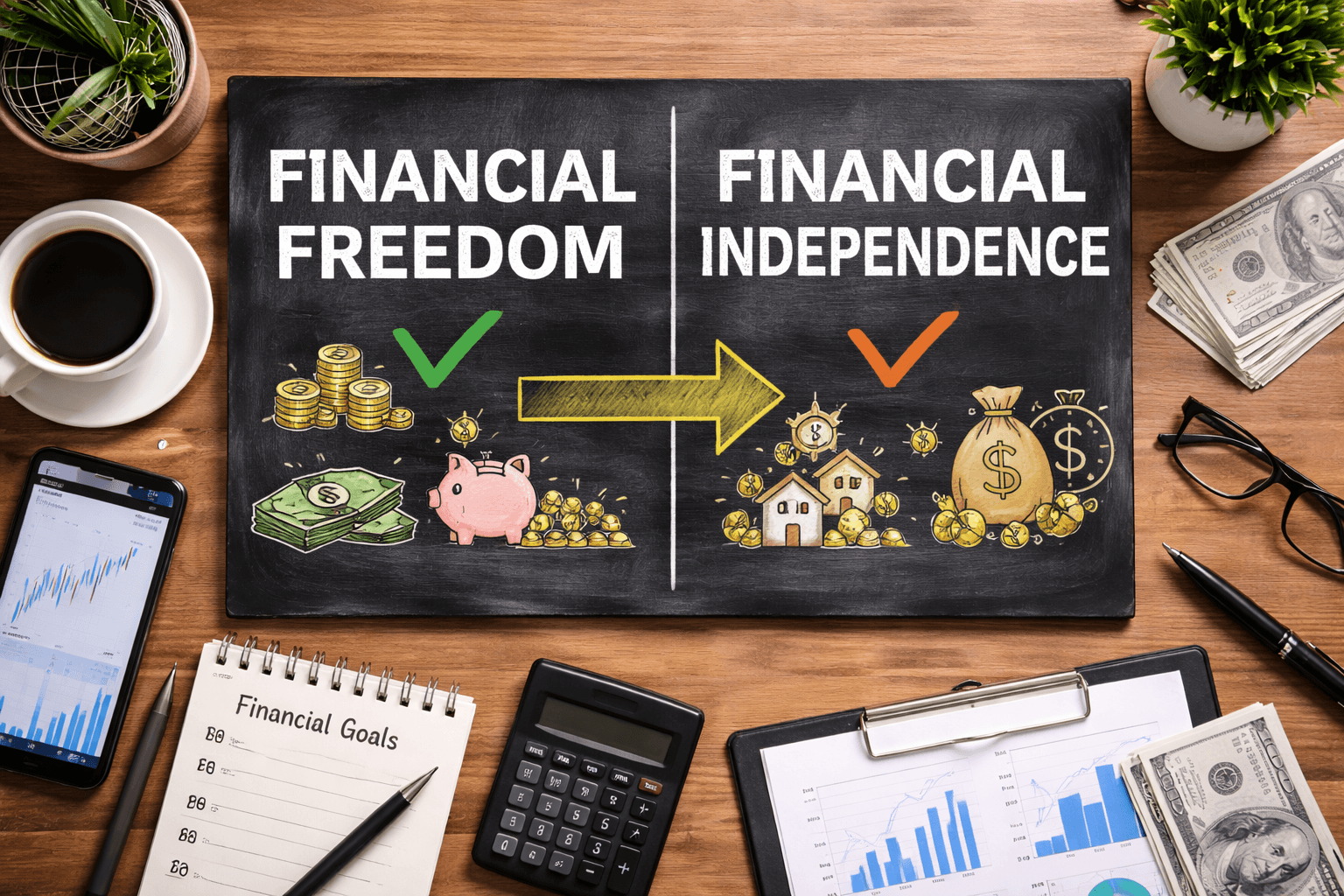
Financial freedom and financial independence are often used interchangeably, but they are not the same.
Financial independence means you can meet your basic needs without relying on active income. Financial freedom goes further by giving you control over time, choices, and lifestyle, and building such opportunities can be supported by professional growth through a linkedin course certificate.
Key differences include:
Financial independence focuses on survival needs
Financial freedom focuses on flexibility and choice
Independence is a milestone, freedom is a lifestyle
Practicing What Is Financial Discipline and How Do You Practice It? bridges the gap between these two stages and ensures progress does not stall.
How to Create a Simple Financial Freedom Plan
A financial freedom plan does not need to be complex. Simple plans are easier to follow and sustain.
A basic plan should include:
Monthly budgeting with clear limits
Emergency fund planning for unexpected events
Investment allocation based on risk tolerance
Debt reduction strategy
Long-term goal mapping
If you want structured guidance, you can Master your money journey through practical frameworks that simplify financial planning.
Daily Habits That Help You Achieve Financial Freedom
Daily habits shape financial outcomes more than occasional big decisions. Small actions repeated consistently create long-term results.
Effective daily habits include:
Reviewing expenses weekly
Avoiding impulse spending
Automating savings and investments
Tracking progress toward goals
Learning continuously about personal finance
If spending feels out of control, it helps to Keep a closer eye on your spending and identify patterns that silently drain money.
The Role of Investing in Financial Freedom
Saving alone is not enough to achieve financial freedom. Investing helps money grow over time and beat inflation.
Beginner-friendly investment basics include:
Mutual funds for long-term wealth creation
Systematic investment plans for consistency
Diversification to reduce risk
Long-term mindset instead of short-term gains
To strengthen your strategy, you can Learn to plan and invest wisely and understand how investments align with long-term goals.
Managing Debt Without Slowing Your Progress
Debt is one of the biggest obstacles on the journey to financial freedom. High-interest loans reduce cash flow and increase financial stress.
Smart debt management includes:
Paying off high-interest debt first
Avoiding unnecessary consumption loans
Refinancing when possible
Living within realistic means
Rising household debt has become a major obstacle for people working toward long-term financial stability. According to the RBI’s Financial Stability Report, India’s household debt reached about 41.3 percent of GDP by March 2025, with consumption loans being a key driver, highlighting the need for better financial awareness often developed through resources like an instagram learning course.
This trend shows how easy access to credit can encourage short-term spending while quietly increasing financial pressure over time. As debt obligations grow, a larger portion of income goes toward repayments, leaving less room for saving, investing, and building wealth. Managing debt carefully and avoiding unnecessary credit is therefore a critical step for anyone aiming to achieve true financial freedom, much like the disciplined approach taught in a start up business course.
Building Passive Income for Long-Term Stability
Passive income helps reduce dependence on a single income source. While it takes time to build, it strengthens financial security.
Common passive income sources include:
Long-term investments
Dividend-generating assets
Digital products or skill-based income
Rental income when feasible
Passive income works best when combined with disciplined spending and consistent investing.
Can Anyone Achieve Financial Freedom?
Yes, financial freedom is possible for most people with realistic planning and patience. It does not require extreme risk or unrealistic sacrifices.
What matters most is:
Starting early or starting now
Staying consistent even during setbacks
Avoiding lifestyle inflation
Building financial discipline gradually
To strengthen your foundation, it helps to Build a strong financial foundation and align daily decisions with long-term goals.
Common Mistakes That Delay Financial Freedom
Avoiding common mistakes saves years of effort.
Frequent mistakes include:
Ignoring budgeting altogether
Delaying investing due to fear
Overusing credit for lifestyle upgrades
Chasing quick returns instead of stability
Not reviewing financial plans regularly
Making informed choices starts with learning how to Make smarter spending choices and understanding personal money behavior.
Learning and Guidance Make the Journey Easier
Financial freedom does not have to be a solo journey. Learning from structured resources reduces confusion and improves confidence.
If you want to improve control and clarity, you can Gain control over your finances through practical money management principles.
For personalized direction, you can always reach out for expert guidance and get support aligned with your financial goals.
See what learners are saying about their experience and results.
If you are a beginner and don't know much about the basics, please buy this course. Everything from the basics to the advanced is explained clearly. I would say it's worth every penny. I couldn't stop watching!

Aishwarya Rebelson
I would like to say one thing for sure, the things that can't be measured, can't be managed. Everyone talks about managing money, but no one talks about how you measure it. This course has given me a framework to measure all aspects of money.

Mayank Kumar
A great experience, with some insane eye-opening data-backed facts about earning, spending, investing, and growing money. I will gift this course to my future children to make them financially literate much earlier than me!!

Abhijith Menon
The course offers deep financial planning insights. I wish I had taken it earlier in my career. It’s highly valuable for anyone looking to manage their finances but unsure where to start or what options exist.

Misha Sharma
This course has not only equipped me with the essential tools and knowledge needed to take charge of my financial future, but also empowered me to make informed decisions with confidence.

Abhishek Kumar
Highly recommend this course. As a CA, I can confidently vouch for its content. This is the kind of financial education that should be taught and discussed openly, without judgment.

Sneha Arvind
At 59 and retired, this course has inspired me to take charge of investing and growing my kids’ earnings. I now feel confident and proud to be my family’s wealth manager. Our wealth creation journey begins today—thank you for this financial confidence!

Chand Thakur
Fantastic and simple to understand. This course has given me a holistic perspective on money. The best part is, the explanation is done in such a simple manner that it can easily be understood by anyone.

Mansi Sharma
It was one of the best financial education resources I’ve found. The course simplified complex concepts into actionable steps, making it easy to apply them to my life. I now feel more empowered and in control of my finances.

Joshua Louis Braganza
This course was enlightening. I am in my 30s and this course has opened my mind and has given me a fresh outlook towards my financial journey. Highly recommended.

Sagar Srivastava
This course does more than give financial advice, it looks at how we think about money. It helps you to let go of bad beliefs and create a better, more thoughtful relationship with your money!

Soumadwip Mishra
If you are a beginner and don't know much about the basics, please buy this course. Everything from the basics to the advanced is explained clearly. I would say it's worth every penny. I couldn't stop watching!
Aishwarya Rebelson
I would like to say one thing for sure, the things that can't be measured, can't be managed. Everyone talks about managing money, but no one talks about how you measure it. This course has given me a framework to measure all aspects of money.
Mayank Kumar
A great experience, with some insane eye-opening data-backed facts about earning, spending, investing, and growing money. I will gift this course to my future children to make them financially literate much earlier than me!!
Abhijith Menon
The course offers deep financial planning insights. I wish I had taken it earlier in my career. It’s highly valuable for anyone looking to manage their finances but unsure where to start or what options exist.
Misha Sharma
This course has not only equipped me with the essential tools and knowledge needed to take charge of my financial future, but also empowered me to make informed decisions with confidence.
Abhishek Kumar
Highly recommend this course. As a CA, I can confidently vouch for its content. This is the kind of financial education that should be taught and discussed openly, without judgment.
Sneha Arvind
At 59 and retired, this course has inspired me to take charge of investing and growing my kids’ earnings. I now feel confident and proud to be my family’s wealth manager. Our wealth creation journey begins today—thank you for this financial confidence!
Chand Thakur
Fantastic and simple to understand. This course has given me a holistic perspective on money. The best part is, the explanation is done in such a simple manner that it can easily be understood by anyone.
Mansi Sharma
It was one of the best financial education resources I’ve found. The course simplified complex concepts into actionable steps, making it easy to apply them to my life. I now feel more empowered and in control of my finances.
Joshua Louis Braganza
This course was enlightening. I am in my 30s and this course has opened my mind and has given me a fresh outlook towards my financial journey. Highly recommended.
Sagar Srivastava
This course does more than give financial advice, it looks at how we think about money. It helps you to let go of bad beliefs and create a better, more thoughtful relationship with your money!
Soumadwip Mishra
If you are a beginner and don't know much about the basics, please buy this course. Everything from the basics to the advanced is explained clearly. I would say it's worth every penny. I couldn't stop watching!
Aishwarya Rebelson
I would like to say one thing for sure, the things that can't be measured, can't be managed. Everyone talks about managing money, but no one talks about how you measure it. This course has given me a framework to measure all aspects of money.
Mayank Kumar
A great experience, with some insane eye-opening data-backed facts about earning, spending, investing, and growing money. I will gift this course to my future children to make them financially literate much earlier than me!!
Abhijith Menon
The course offers deep financial planning insights. I wish I had taken it earlier in my career. It’s highly valuable for anyone looking to manage their finances but unsure where to start or what options exist.
Misha Sharma
This course has not only equipped me with the essential tools and knowledge needed to take charge of my financial future, but also empowered me to make informed decisions with confidence.
Abhishek Kumar
Highly recommend this course. As a CA, I can confidently vouch for its content. This is the kind of financial education that should be taught and discussed openly, without judgment.
Sneha Arvind
At 59 and retired, this course has inspired me to take charge of investing and growing my kids’ earnings. I now feel confident and proud to be my family’s wealth manager. Our wealth creation journey begins today—thank you for this financial confidence!
Chand Thakur
Fantastic and simple to understand. This course has given me a holistic perspective on money. The best part is, the explanation is done in such a simple manner that it can easily be understood by anyone.
Mansi Sharma
It was one of the best financial education resources I’ve found. The course simplified complex concepts into actionable steps, making it easy to apply them to my life. I now feel more empowered and in control of my finances.
Joshua Louis Braganza
This course was enlightening. I am in my 30s and this course has opened my mind and has given me a fresh outlook towards my financial journey. Highly recommended.
Sagar Srivastava
This course does more than give financial advice, it looks at how we think about money. It helps you to let go of bad beliefs and create a better, more thoughtful relationship with your money!
Soumadwip Mishra
If you are a beginner and don't know much about the basics, please buy this course. Everything from the basics to the advanced is explained clearly. I would say it's worth every penny. I couldn't stop watching!
Aishwarya Rebelson
I would like to say one thing for sure, the things that can't be measured, can't be managed. Everyone talks about managing money, but no one talks about how you measure it. This course has given me a framework to measure all aspects of money.
Mayank Kumar
A great experience, with some insane eye-opening data-backed facts about earning, spending, investing, and growing money. I will gift this course to my future children to make them financially literate much earlier than me!!
Abhijith Menon
The course offers deep financial planning insights. I wish I had taken it earlier in my career. It’s highly valuable for anyone looking to manage their finances but unsure where to start or what options exist.
Misha Sharma
This course has not only equipped me with the essential tools and knowledge needed to take charge of my financial future, but also empowered me to make informed decisions with confidence.
Abhishek Kumar
Highly recommend this course. As a CA, I can confidently vouch for its content. This is the kind of financial education that should be taught and discussed openly, without judgment.
Sneha Arvind
At 59 and retired, this course has inspired me to take charge of investing and growing my kids’ earnings. I now feel confident and proud to be my family’s wealth manager. Our wealth creation journey begins today—thank you for this financial confidence!
Chand Thakur
Fantastic and simple to understand. This course has given me a holistic perspective on money. The best part is, the explanation is done in such a simple manner that it can easily be understood by anyone.
Mansi Sharma
It was one of the best financial education resources I’ve found. The course simplified complex concepts into actionable steps, making it easy to apply them to my life. I now feel more empowered and in control of my finances.
Joshua Louis Braganza
This course was enlightening. I am in my 30s and this course has opened my mind and has given me a fresh outlook towards my financial journey. Highly recommended.
Sagar Srivastava
This course does more than give financial advice, it looks at how we think about money. It helps you to let go of bad beliefs and create a better, more thoughtful relationship with your money!
Soumadwip Mishra
If you want updates Please check our social Media
Frequently Asked Questions
1. How can beginners start working toward financial freedom?
Start by tracking expenses, building an emergency fund, and learning basic investing.
2. What is the fastest way to achieve financial freedom?
There is no instant method. Consistent saving, investing, and income growth work best.
3. How much money do you need to be financially free?
It depends on lifestyle, expenses, and long-term goals.
4. Can financial freedom be achieved on a low income?
Yes, through disciplined spending and smart financial planning.
5. What are the best habits for financial success?
Budgeting, investing regularly, and avoiding unnecessary debt.
6. How long does it take to achieve financial freedom?
For most people, it takes several years of consistent effort.
7. What role does investing play in financial independence?
Investing helps money grow and protects against inflation.
8. How can I build passive income for financial freedom?
Start with investments and gradually explore additional income streams.
9. What mistakes should I avoid on my financial freedom journey?
Impulse spending, high-interest debt, and lack of planning.
10. Is financial freedom possible without taking big risks?
Yes, steady and disciplined approaches are often more sustainable.

If you want updates Please check our social Media
Frequently Asked Questions
1. How can beginners start working toward financial freedom?
Start by tracking expenses, building an emergency fund, and learning basic investing.
2. What is the fastest way to achieve financial freedom?
There is no instant method. Consistent saving, investing, and income growth work best.
3. How much money do you need to be financially free?
It depends on lifestyle, expenses, and long-term goals.
4. Can financial freedom be achieved on a low income?
Yes, through disciplined spending and smart financial planning.
5. What are the best habits for financial success?
Budgeting, investing regularly, and avoiding unnecessary debt.
6. How long does it take to achieve financial freedom?
For most people, it takes several years of consistent effort.
7. What role does investing play in financial independence?
Investing helps money grow and protects against inflation.
8. How can I build passive income for financial freedom?
Start with investments and gradually explore additional income streams.
9. What mistakes should I avoid on my financial freedom journey?
Impulse spending, high-interest debt, and lack of planning.
10. Is financial freedom possible without taking big risks?
Yes, steady and disciplined approaches are often more sustainable.
Ready To Start
Your Journey?
ENROLL NOW




How to achieve financial freedom is a goal many people talk about, yet few plan for effectively. Rising expenses, lifestyle inflation, and easy credit often trap people in a cycle of earning and spending without long-term security.
The issue is not income alone. Even high earners struggle when money lacks structure and clarity. Without a plan, cash flows out as fast as it comes in, making it hard to build stability or Master your money journey with confidence.
Financial freedom comes from simple systems around spending, saving, investing, and daily habits. It is built through consistency, awareness, and smart decisions over time, not quick fixes.
This video walks you through a simple, step-by-step money reset plan that can completely change your relationship with money. Learn how to analyze your bank statements, identify hidden expenses, cancel unnecessary subscriptions, secure your accounts, and build awareness without guilt.
The video also explains how to define your own version of a rich life, create a practical budget using the 50-30-20 framework, track daily spending, and control money leaks without sacrificing happiness. Ideal for anyone who wants better money management, financial clarity, and long-term financial freedom through realistic habits, along with improving decision-making through a communication development course.
How Long Does It Take to Achieve Financial Freedom
There is no universal timeline for financial freedom. The time required depends on income, expenses, debt levels, lifestyle choices, and consistency.
For most people, financial freedom is a gradual process that takes several years of focused effort. Factors that influence the timeline include:
Current savings and emergency fund status
Amount of existing debt
Ability to invest consistently
Willingness to control lifestyle inflation
Long-term financial goals
People who start early and stay disciplined usually reach financial independence faster than those who delay planning. The key is starting with what you have instead of waiting for the perfect moment.
How to Achieve Financial Freedom Step by Step
Financial freedom becomes manageable when broken into simple, repeatable steps. Each step builds on the previous one and creates momentum.
Key steps to follow include:
Track income and expenses clearly
Build an emergency fund first
Eliminate high-interest debt
Start investing regularly
Increase income through skill growth or side hustles
Learning strong money basics is essential. Building awareness through What Is Financial Literacy and Why Is It Important for Everyone? helps you understand how money decisions impact long-term stability.
Financial Freedom vs Financial Independence
Financial freedom and financial independence are often used interchangeably, but they are not the same.
Financial independence means you can meet your basic needs without relying on active income. Financial freedom goes further by giving you control over time, choices, and lifestyle, and building such opportunities can be supported by professional growth through a linkedin course certificate.
Key differences include:
Financial independence focuses on survival needs
Financial freedom focuses on flexibility and choice
Independence is a milestone, freedom is a lifestyle
Practicing What Is Financial Discipline and How Do You Practice It? bridges the gap between these two stages and ensures progress does not stall.
How to Create a Simple Financial Freedom Plan
A financial freedom plan does not need to be complex. Simple plans are easier to follow and sustain.
A basic plan should include:
Monthly budgeting with clear limits
Emergency fund planning for unexpected events
Investment allocation based on risk tolerance
Debt reduction strategy
Long-term goal mapping
If you want structured guidance, you can Master your money journey through practical frameworks that simplify financial planning.
Daily Habits That Help You Achieve Financial Freedom
Daily habits shape financial outcomes more than occasional big decisions. Small actions repeated consistently create long-term results.
Effective daily habits include:
Reviewing expenses weekly
Avoiding impulse spending
Automating savings and investments
Tracking progress toward goals
Learning continuously about personal finance
If spending feels out of control, it helps to Keep a closer eye on your spending and identify patterns that silently drain money.
The Role of Investing in Financial Freedom
Saving alone is not enough to achieve financial freedom. Investing helps money grow over time and beat inflation.
Beginner-friendly investment basics include:
Mutual funds for long-term wealth creation
Systematic investment plans for consistency
Diversification to reduce risk
Long-term mindset instead of short-term gains
To strengthen your strategy, you can Learn to plan and invest wisely and understand how investments align with long-term goals.
Managing Debt Without Slowing Your Progress
Debt is one of the biggest obstacles on the journey to financial freedom. High-interest loans reduce cash flow and increase financial stress.
Smart debt management includes:
Paying off high-interest debt first
Avoiding unnecessary consumption loans
Refinancing when possible
Living within realistic means
Rising household debt has become a major obstacle for people working toward long-term financial stability. According to the RBI’s Financial Stability Report, India’s household debt reached about 41.3 percent of GDP by March 2025, with consumption loans being a key driver, highlighting the need for better financial awareness often developed through resources like an instagram learning course.
This trend shows how easy access to credit can encourage short-term spending while quietly increasing financial pressure over time. As debt obligations grow, a larger portion of income goes toward repayments, leaving less room for saving, investing, and building wealth. Managing debt carefully and avoiding unnecessary credit is therefore a critical step for anyone aiming to achieve true financial freedom, much like the disciplined approach taught in a start up business course.
Building Passive Income for Long-Term Stability
Passive income helps reduce dependence on a single income source. While it takes time to build, it strengthens financial security.
Common passive income sources include:
Long-term investments
Dividend-generating assets
Digital products or skill-based income
Rental income when feasible
Passive income works best when combined with disciplined spending and consistent investing.
Can Anyone Achieve Financial Freedom?
Yes, financial freedom is possible for most people with realistic planning and patience. It does not require extreme risk or unrealistic sacrifices.
What matters most is:
Starting early or starting now
Staying consistent even during setbacks
Avoiding lifestyle inflation
Building financial discipline gradually
To strengthen your foundation, it helps to Build a strong financial foundation and align daily decisions with long-term goals.
Common Mistakes That Delay Financial Freedom
Avoiding common mistakes saves years of effort.
Frequent mistakes include:
Ignoring budgeting altogether
Delaying investing due to fear
Overusing credit for lifestyle upgrades
Chasing quick returns instead of stability
Not reviewing financial plans regularly
Making informed choices starts with learning how to Make smarter spending choices and understanding personal money behavior.
Learning and Guidance Make the Journey Easier
Financial freedom does not have to be a solo journey. Learning from structured resources reduces confusion and improves confidence.
If you want to improve control and clarity, you can Gain control over your finances through practical money management principles.
For personalized direction, you can always reach out for expert guidance and get support aligned with your financial goals.
See what learners are saying about their experience and results.
If you are a beginner and don't know much about the basics, please buy this course. Everything from the basics to the advanced is explained clearly. I would say it's worth every penny. I couldn't stop watching!
Aishwarya Rebelson
I would like to say one thing for sure, the things that can't be measured, can't be managed. Everyone talks about managing money, but no one talks about how you measure it. This course has given me a framework to measure all aspects of money.
Mayank Kumar
A great experience, with some insane eye-opening data-backed facts about earning, spending, investing, and growing money. I will gift this course to my future children to make them financially literate much earlier than me!!
Abhijith Menon
The course offers deep financial planning insights. I wish I had taken it earlier in my career. It’s highly valuable for anyone looking to manage their finances but unsure where to start or what options exist.
Misha Sharma
This course has not only equipped me with the essential tools and knowledge needed to take charge of my financial future, but also empowered me to make informed decisions with confidence.
Abhishek Kumar
Highly recommend this course. As a CA, I can confidently vouch for its content. This is the kind of financial education that should be taught and discussed openly, without judgment.
Sneha Arvind
At 59 and retired, this course has inspired me to take charge of investing and growing my kids’ earnings. I now feel confident and proud to be my family’s wealth manager. Our wealth creation journey begins today—thank you for this financial confidence!
Chand Thakur
Fantastic and simple to understand. This course has given me a holistic perspective on money. The best part is, the explanation is done in such a simple manner that it can easily be understood by anyone.
Mansi Sharma
It was one of the best financial education resources I’ve found. The course simplified complex concepts into actionable steps, making it easy to apply them to my life. I now feel more empowered and in control of my finances.
Joshua Louis Braganza
This course was enlightening. I am in my 30s and this course has opened my mind and has given me a fresh outlook towards my financial journey. Highly recommended.
Sagar Srivastava
This course does more than give financial advice, it looks at how we think about money. It helps you to let go of bad beliefs and create a better, more thoughtful relationship with your money!
Soumadwip Mishra
If you want updates Please check our social Media
Frequently Asked Questions
1. How can beginners start working toward financial freedom?
Start by tracking expenses, building an emergency fund, and learning basic investing.
2. What is the fastest way to achieve financial freedom?
There is no instant method. Consistent saving, investing, and income growth work best.
3. How much money do you need to be financially free?
It depends on lifestyle, expenses, and long-term goals.
4. Can financial freedom be achieved on a low income?
Yes, through disciplined spending and smart financial planning.
5. What are the best habits for financial success?
Budgeting, investing regularly, and avoiding unnecessary debt.
6. How long does it take to achieve financial freedom?
For most people, it takes several years of consistent effort.
7. What role does investing play in financial independence?
Investing helps money grow and protects against inflation.
8. How can I build passive income for financial freedom?
Start with investments and gradually explore additional income streams.
9. What mistakes should I avoid on my financial freedom journey?
Impulse spending, high-interest debt, and lack of planning.
10. Is financial freedom possible without taking big risks?
Yes, steady and disciplined approaches are often more sustainable.
If you want updates Please check our social Media
Frequently Asked Questions
1. How can beginners start working toward financial freedom?
Start by tracking expenses, building an emergency fund, and learning basic investing.
2. What is the fastest way to achieve financial freedom?
There is no instant method. Consistent saving, investing, and income growth work best.
3. How much money do you need to be financially free?
It depends on lifestyle, expenses, and long-term goals.
4. Can financial freedom be achieved on a low income?
Yes, through disciplined spending and smart financial planning.
5. What are the best habits for financial success?
Budgeting, investing regularly, and avoiding unnecessary debt.
6. How long does it take to achieve financial freedom?
For most people, it takes several years of consistent effort.
7. What role does investing play in financial independence?
Investing helps money grow and protects against inflation.
8. How can I build passive income for financial freedom?
Start with investments and gradually explore additional income streams.
9. What mistakes should I avoid on my financial freedom journey?
Impulse spending, high-interest debt, and lack of planning.
10. Is financial freedom possible without taking big risks?
Yes, steady and disciplined approaches are often more sustainable.
Ready To Start
Your Journey?
ENROLL NOW
How to achieve financial freedom is a goal many people talk about, yet few plan for effectively. Rising expenses, lifestyle inflation, and easy credit often trap people in a cycle of earning and spending without long-term security.
The issue is not income alone. Even high earners struggle when money lacks structure and clarity. Without a plan, cash flows out as fast as it comes in, making it hard to build stability or Master your money journey with confidence.
Financial freedom comes from simple systems around spending, saving, investing, and daily habits. It is built through consistency, awareness, and smart decisions over time, not quick fixes.
This video walks you through a simple, step-by-step money reset plan that can completely change your relationship with money. Learn how to analyze your bank statements, identify hidden expenses, cancel unnecessary subscriptions, secure your accounts, and build awareness without guilt.
The video also explains how to define your own version of a rich life, create a practical budget using the 50-30-20 framework, track daily spending, and control money leaks without sacrificing happiness. Ideal for anyone who wants better money management, financial clarity, and long-term financial freedom through realistic habits, along with improving decision-making through a communication development course.
How Long Does It Take to Achieve Financial Freedom
There is no universal timeline for financial freedom. The time required depends on income, expenses, debt levels, lifestyle choices, and consistency.
For most people, financial freedom is a gradual process that takes several years of focused effort. Factors that influence the timeline include:
Current savings and emergency fund status
Amount of existing debt
Ability to invest consistently
Willingness to control lifestyle inflation
Long-term financial goals
People who start early and stay disciplined usually reach financial independence faster than those who delay planning. The key is starting with what you have instead of waiting for the perfect moment.
How to Achieve Financial Freedom Step by Step
Financial freedom becomes manageable when broken into simple, repeatable steps. Each step builds on the previous one and creates momentum.
Key steps to follow include:
Track income and expenses clearly
Build an emergency fund first
Eliminate high-interest debt
Start investing regularly
Increase income through skill growth or side hustles
Learning strong money basics is essential. Building awareness through What Is Financial Literacy and Why Is It Important for Everyone? helps you understand how money decisions impact long-term stability.
Financial Freedom vs Financial Independence
Financial freedom and financial independence are often used interchangeably, but they are not the same.
Financial independence means you can meet your basic needs without relying on active income. Financial freedom goes further by giving you control over time, choices, and lifestyle, and building such opportunities can be supported by professional growth through a linkedin course certificate.
Key differences include:
Financial independence focuses on survival needs
Financial freedom focuses on flexibility and choice
Independence is a milestone, freedom is a lifestyle
Practicing What Is Financial Discipline and How Do You Practice It? bridges the gap between these two stages and ensures progress does not stall.
How to Create a Simple Financial Freedom Plan
A financial freedom plan does not need to be complex. Simple plans are easier to follow and sustain.
A basic plan should include:
Monthly budgeting with clear limits
Emergency fund planning for unexpected events
Investment allocation based on risk tolerance
Debt reduction strategy
Long-term goal mapping
If you want structured guidance, you can Master your money journey through practical frameworks that simplify financial planning.
Daily Habits That Help You Achieve Financial Freedom
Daily habits shape financial outcomes more than occasional big decisions. Small actions repeated consistently create long-term results.
Effective daily habits include:
Reviewing expenses weekly
Avoiding impulse spending
Automating savings and investments
Tracking progress toward goals
Learning continuously about personal finance
If spending feels out of control, it helps to Keep a closer eye on your spending and identify patterns that silently drain money.
The Role of Investing in Financial Freedom
Saving alone is not enough to achieve financial freedom. Investing helps money grow over time and beat inflation.
Beginner-friendly investment basics include:
Mutual funds for long-term wealth creation
Systematic investment plans for consistency
Diversification to reduce risk
Long-term mindset instead of short-term gains
To strengthen your strategy, you can Learn to plan and invest wisely and understand how investments align with long-term goals.
Managing Debt Without Slowing Your Progress
Debt is one of the biggest obstacles on the journey to financial freedom. High-interest loans reduce cash flow and increase financial stress.
Smart debt management includes:
Paying off high-interest debt first
Avoiding unnecessary consumption loans
Refinancing when possible
Living within realistic means
Rising household debt has become a major obstacle for people working toward long-term financial stability. According to the RBI’s Financial Stability Report, India’s household debt reached about 41.3 percent of GDP by March 2025, with consumption loans being a key driver, highlighting the need for better financial awareness often developed through resources like an instagram learning course.
This trend shows how easy access to credit can encourage short-term spending while quietly increasing financial pressure over time. As debt obligations grow, a larger portion of income goes toward repayments, leaving less room for saving, investing, and building wealth. Managing debt carefully and avoiding unnecessary credit is therefore a critical step for anyone aiming to achieve true financial freedom, much like the disciplined approach taught in a start up business course.
Building Passive Income for Long-Term Stability
Passive income helps reduce dependence on a single income source. While it takes time to build, it strengthens financial security.
Common passive income sources include:
Long-term investments
Dividend-generating assets
Digital products or skill-based income
Rental income when feasible
Passive income works best when combined with disciplined spending and consistent investing.
Can Anyone Achieve Financial Freedom?
Yes, financial freedom is possible for most people with realistic planning and patience. It does not require extreme risk or unrealistic sacrifices.
What matters most is:
Starting early or starting now
Staying consistent even during setbacks
Avoiding lifestyle inflation
Building financial discipline gradually
To strengthen your foundation, it helps to Build a strong financial foundation and align daily decisions with long-term goals.
Common Mistakes That Delay Financial Freedom
Avoiding common mistakes saves years of effort.
Frequent mistakes include:
Ignoring budgeting altogether
Delaying investing due to fear
Overusing credit for lifestyle upgrades
Chasing quick returns instead of stability
Not reviewing financial plans regularly
Making informed choices starts with learning how to Make smarter spending choices and understanding personal money behavior.
Learning and Guidance Make the Journey Easier
Financial freedom does not have to be a solo journey. Learning from structured resources reduces confusion and improves confidence.
If you want to improve control and clarity, you can Gain control over your finances through practical money management principles.
For personalized direction, you can always reach out for expert guidance and get support aligned with your financial goals.
See what learners are saying about their experience and results.
If you are a beginner and don't know much about the basics, please buy this course. Everything from the basics to the advanced is explained clearly. I would say it's worth every penny. I couldn't stop watching!
Aishwarya Rebelson
I would like to say one thing for sure, the things that can't be measured, can't be managed. Everyone talks about managing money, but no one talks about how you measure it. This course has given me a framework to measure all aspects of money.
Mayank Kumar
A great experience, with some insane eye-opening data-backed facts about earning, spending, investing, and growing money. I will gift this course to my future children to make them financially literate much earlier than me!!
Abhijith Menon
The course offers deep financial planning insights. I wish I had taken it earlier in my career. It’s highly valuable for anyone looking to manage their finances but unsure where to start or what options exist.
Misha Sharma
This course has not only equipped me with the essential tools and knowledge needed to take charge of my financial future, but also empowered me to make informed decisions with confidence.
Abhishek Kumar
Highly recommend this course. As a CA, I can confidently vouch for its content. This is the kind of financial education that should be taught and discussed openly, without judgment.
Sneha Arvind
At 59 and retired, this course has inspired me to take charge of investing and growing my kids’ earnings. I now feel confident and proud to be my family’s wealth manager. Our wealth creation journey begins today—thank you for this financial confidence!
Chand Thakur
Fantastic and simple to understand. This course has given me a holistic perspective on money. The best part is, the explanation is done in such a simple manner that it can easily be understood by anyone.
Mansi Sharma
It was one of the best financial education resources I’ve found. The course simplified complex concepts into actionable steps, making it easy to apply them to my life. I now feel more empowered and in control of my finances.
Joshua Louis Braganza
This course was enlightening. I am in my 30s and this course has opened my mind and has given me a fresh outlook towards my financial journey. Highly recommended.
Sagar Srivastava
This course does more than give financial advice, it looks at how we think about money. It helps you to let go of bad beliefs and create a better, more thoughtful relationship with your money!
Soumadwip Mishra
If you are a beginner and don't know much about the basics, please buy this course. Everything from the basics to the advanced is explained clearly. I would say it's worth every penny. I couldn't stop watching!
Aishwarya Rebelson
I would like to say one thing for sure, the things that can't be measured, can't be managed. Everyone talks about managing money, but no one talks about how you measure it. This course has given me a framework to measure all aspects of money.
Mayank Kumar
A great experience, with some insane eye-opening data-backed facts about earning, spending, investing, and growing money. I will gift this course to my future children to make them financially literate much earlier than me!!
Abhijith Menon
The course offers deep financial planning insights. I wish I had taken it earlier in my career. It’s highly valuable for anyone looking to manage their finances but unsure where to start or what options exist.
Misha Sharma
This course has not only equipped me with the essential tools and knowledge needed to take charge of my financial future, but also empowered me to make informed decisions with confidence.
Abhishek Kumar
Highly recommend this course. As a CA, I can confidently vouch for its content. This is the kind of financial education that should be taught and discussed openly, without judgment.
Sneha Arvind
At 59 and retired, this course has inspired me to take charge of investing and growing my kids’ earnings. I now feel confident and proud to be my family’s wealth manager. Our wealth creation journey begins today—thank you for this financial confidence!
Chand Thakur
Fantastic and simple to understand. This course has given me a holistic perspective on money. The best part is, the explanation is done in such a simple manner that it can easily be understood by anyone.
Mansi Sharma
It was one of the best financial education resources I’ve found. The course simplified complex concepts into actionable steps, making it easy to apply them to my life. I now feel more empowered and in control of my finances.
Joshua Louis Braganza
This course was enlightening. I am in my 30s and this course has opened my mind and has given me a fresh outlook towards my financial journey. Highly recommended.
Sagar Srivastava
This course does more than give financial advice, it looks at how we think about money. It helps you to let go of bad beliefs and create a better, more thoughtful relationship with your money!
Soumadwip Mishra
If you are a beginner and don't know much about the basics, please buy this course. Everything from the basics to the advanced is explained clearly. I would say it's worth every penny. I couldn't stop watching!
Aishwarya Rebelson
I would like to say one thing for sure, the things that can't be measured, can't be managed. Everyone talks about managing money, but no one talks about how you measure it. This course has given me a framework to measure all aspects of money.
Mayank Kumar
A great experience, with some insane eye-opening data-backed facts about earning, spending, investing, and growing money. I will gift this course to my future children to make them financially literate much earlier than me!!
Abhijith Menon
The course offers deep financial planning insights. I wish I had taken it earlier in my career. It’s highly valuable for anyone looking to manage their finances but unsure where to start or what options exist.
Misha Sharma
This course has not only equipped me with the essential tools and knowledge needed to take charge of my financial future, but also empowered me to make informed decisions with confidence.
Abhishek Kumar
Highly recommend this course. As a CA, I can confidently vouch for its content. This is the kind of financial education that should be taught and discussed openly, without judgment.
Sneha Arvind
At 59 and retired, this course has inspired me to take charge of investing and growing my kids’ earnings. I now feel confident and proud to be my family’s wealth manager. Our wealth creation journey begins today—thank you for this financial confidence!
Chand Thakur
Fantastic and simple to understand. This course has given me a holistic perspective on money. The best part is, the explanation is done in such a simple manner that it can easily be understood by anyone.
Mansi Sharma
It was one of the best financial education resources I’ve found. The course simplified complex concepts into actionable steps, making it easy to apply them to my life. I now feel more empowered and in control of my finances.
Joshua Louis Braganza
This course was enlightening. I am in my 30s and this course has opened my mind and has given me a fresh outlook towards my financial journey. Highly recommended.
Sagar Srivastava
This course does more than give financial advice, it looks at how we think about money. It helps you to let go of bad beliefs and create a better, more thoughtful relationship with your money!
Soumadwip Mishra
If you are a beginner and don't know much about the basics, please buy this course. Everything from the basics to the advanced is explained clearly. I would say it's worth every penny. I couldn't stop watching!
Aishwarya Rebelson
I would like to say one thing for sure, the things that can't be measured, can't be managed. Everyone talks about managing money, but no one talks about how you measure it. This course has given me a framework to measure all aspects of money.
Mayank Kumar
A great experience, with some insane eye-opening data-backed facts about earning, spending, investing, and growing money. I will gift this course to my future children to make them financially literate much earlier than me!!
Abhijith Menon
The course offers deep financial planning insights. I wish I had taken it earlier in my career. It’s highly valuable for anyone looking to manage their finances but unsure where to start or what options exist.
Misha Sharma
This course has not only equipped me with the essential tools and knowledge needed to take charge of my financial future, but also empowered me to make informed decisions with confidence.
Abhishek Kumar
Highly recommend this course. As a CA, I can confidently vouch for its content. This is the kind of financial education that should be taught and discussed openly, without judgment.
Sneha Arvind
At 59 and retired, this course has inspired me to take charge of investing and growing my kids’ earnings. I now feel confident and proud to be my family’s wealth manager. Our wealth creation journey begins today—thank you for this financial confidence!
Chand Thakur
Fantastic and simple to understand. This course has given me a holistic perspective on money. The best part is, the explanation is done in such a simple manner that it can easily be understood by anyone.
Mansi Sharma
It was one of the best financial education resources I’ve found. The course simplified complex concepts into actionable steps, making it easy to apply them to my life. I now feel more empowered and in control of my finances.
Joshua Louis Braganza
This course was enlightening. I am in my 30s and this course has opened my mind and has given me a fresh outlook towards my financial journey. Highly recommended.
Sagar Srivastava
This course does more than give financial advice, it looks at how we think about money. It helps you to let go of bad beliefs and create a better, more thoughtful relationship with your money!
Soumadwip Mishra
If you want updates Please check our social Media
Frequently Asked Questions
1. How can beginners start working toward financial freedom?
Start by tracking expenses, building an emergency fund, and learning basic investing.
2. What is the fastest way to achieve financial freedom?
There is no instant method. Consistent saving, investing, and income growth work best.
3. How much money do you need to be financially free?
It depends on lifestyle, expenses, and long-term goals.
4. Can financial freedom be achieved on a low income?
Yes, through disciplined spending and smart financial planning.
5. What are the best habits for financial success?
Budgeting, investing regularly, and avoiding unnecessary debt.
6. How long does it take to achieve financial freedom?
For most people, it takes several years of consistent effort.
7. What role does investing play in financial independence?
Investing helps money grow and protects against inflation.
8. How can I build passive income for financial freedom?
Start with investments and gradually explore additional income streams.
9. What mistakes should I avoid on my financial freedom journey?
Impulse spending, high-interest debt, and lack of planning.
10. Is financial freedom possible without taking big risks?
Yes, steady and disciplined approaches are often more sustainable.
If you want updates Please check our social Media
Frequently Asked Questions
1. How can beginners start working toward financial freedom?
Start by tracking expenses, building an emergency fund, and learning basic investing.
2. What is the fastest way to achieve financial freedom?
There is no instant method. Consistent saving, investing, and income growth work best.
3. How much money do you need to be financially free?
It depends on lifestyle, expenses, and long-term goals.
4. Can financial freedom be achieved on a low income?
Yes, through disciplined spending and smart financial planning.
5. What are the best habits for financial success?
Budgeting, investing regularly, and avoiding unnecessary debt.
6. How long does it take to achieve financial freedom?
For most people, it takes several years of consistent effort.
7. What role does investing play in financial independence?
Investing helps money grow and protects against inflation.
8. How can I build passive income for financial freedom?
Start with investments and gradually explore additional income streams.
9. What mistakes should I avoid on my financial freedom journey?
Impulse spending, high-interest debt, and lack of planning.
10. Is financial freedom possible without taking big risks?
Yes, steady and disciplined approaches are often more sustainable.
Ready To Start
Your Journey?
ENROLL NOW
© Copyright 2025
© Copyright 2025
© Copyright 2025