What is 1st 2nd 3rd in LinkedIn is a common question for professionals who want to grow their network but feel confused by LinkedIn’s connection labels. Many users send requests, scroll profiles, and message people without understanding how LinkedIn categorizes connections or why it matters.
This lack of clarity often leads to missed opportunities. People try to message the wrong contacts, ignore valuable networking paths, or fail to use LinkedIn’s connection system strategically. The good news is that once you understand how 1st, 2nd, and 3rd connections work, LinkedIn becomes far more powerful for networking, job search, and visibility.
This guide explains what each connection level means, how LinkedIn categorizes them, and how to use them effectively for professional growth.
How LinkedIn Categorizes Your Connections
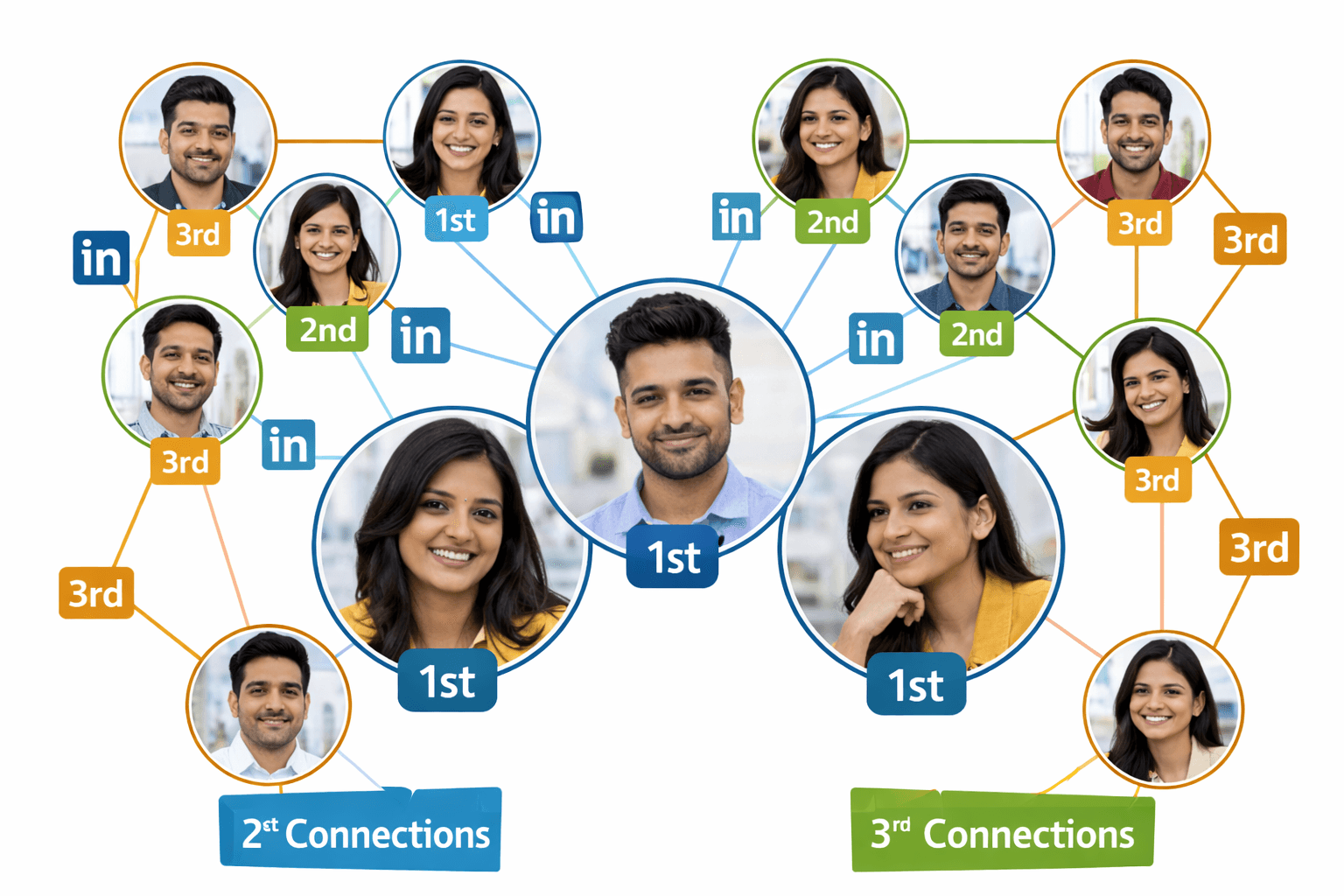
LinkedIn organizes every user into connection levels based on how closely you are connected to them. These levels help LinkedIn manage visibility, messaging access, and networking pathways.
The three primary connection levels are:
1st-degree connections
2nd-degree connections
3rd-degree connections
Each level plays a different role in LinkedIn networking and profile reach.
What Is a 1st-Degree Connection on LinkedIn?
A 1st-degree connection is someone you are directly connected with on LinkedIn. This happens when:
You send a connection request and it is accepted
Someone sends you a request and you accept it
Once connected, you can:
Message them freely
See their full profile details
Engage easily with their posts
Appear more frequently in each other’s feed
1st-degree connections form the foundation of your LinkedIn network. Recruiters, hiring managers, and collaborators often prioritize profiles with strong and relevant first-degree networks, making it easier to communicate clearly and create quality content in less time when engaging directly with your audience.
If you want structured guidance on building meaningful connections, you can Learn LinkedIn Strategies through a step-by-step approach.
What Is a 2nd-Degree Connection on LinkedIn?
A 2nd-degree connection is someone who is connected to one of your 1st-degree connections, but not directly connected to you.
You will see “2nd” next to their name when:
They are connected to someone in your network
You have not sent or accepted a connection request with them
With 2nd-degree connections, you can:
Send a connection request
Sometimes message them using LinkedIn credits or shared groups
View most of their profile details
2nd-degree connections are extremely valuable because they act as bridges to new opportunities. Many recruiters and professionals discover candidates through mutual connections at this level, which is why understanding engagement terms like CFBR meaning on LinkedIn can help improve visibility within extended networks.
What Is a 3rd-Degree Connection on LinkedIn?
A 3rd-degree connection is someone who is connected to your 2nd-degree connections.
In simple terms:
You do not share any direct or mutual connection
They are further away in your LinkedIn network
For 3rd-degree connections:
Messaging is usually restricted
Profile visibility is limited
Engagement reach is lower
However, they still matter. Many job seekers and professionals expand their reach by slowly converting 3rd-degree connections into 2nd and eventually 1st-degree connections.
How to View 1st, 2nd, and 3rd Connections
LinkedIn clearly labels connection levels across the platform. You can see them:
Next to profile names in search results
On individual LinkedIn profiles
In comments and post interactions
You can also filter search results by connection level using LinkedIn filters. This is especially useful for recruiters, job seekers, and sales professionals.
If your goal is job search, pairing this knowledge with LinkedIn Job Search Tips can significantly improve results.
How to Connect With 2nd and 3rd Connections
Moving beyond your immediate network requires intention. Here is how to approach it effectively.
For 2nd-degree connections:
Send a personalized connection request
Mention a mutual connection when relevant
Explain why you want to connect
For 3rd-degree connections:
Follow them first
Engage with their posts
Send a thoughtful request once familiar
Avoid sending generic requests. Personalized outreach increases acceptance rates and builds trust.
How Recruiters Use Connection Levels

Recruiters rely heavily on LinkedIn connection levels when sourcing candidates.
They often:
Search within 2nd-degree connections for warmer leads
Prefer profiles with strong 1st-degree engagement
Use mutual connections for referrals
Understanding how recruiters view your network can improve how you position yourself. Pairing this knowledge with Open-to-Work Post Tips can further increase recruiter visibility.
Common Mistakes While Connecting on LinkedIn
Many users unknowingly limit their growth by making avoidable mistakes, such as:
Sending connection requests without context
Ignoring 2nd-degree opportunities
Connecting randomly without relevance
Spamming messages after connection
These behaviors reduce acceptance rates and damage professional credibility.
Tips to Move 2nd Connections to 1st Connections
Converting 2nd-degree connections into meaningful 1st-degree relationships requires consistency.
Effective strategies include:
Engaging with their posts regularly
Commenting with thoughtful insights
Sending value-based messages
Avoiding immediate pitches
As your network grows, you also increase discoverability. To strengthen this further, focus on Boost Linkedin Profile Visibility through profile optimization and consistent engagement.
Why Connection Levels Matter for Profile Visibility
LinkedIn’s algorithm favors content and profiles that are actively engaging within close networks.
Benefits of stronger connection levels include:
Higher post visibility
Better search placement
Increased profile views
More inbound messages
Connection strategy is not about numbers. It is about relevance and interaction.
If you want a deeper roadmap, LinkedIn Promotion Tips can help you align networking with long-term growth.
Building a Smart LinkedIn Network
A healthy LinkedIn network balances quality and reach.
Focus on:
Industry relevance
Shared interests
Long-term professional value
LinkedIn rewards users who build relationships instead of collecting connections.
Conclusion
Understanding what is 1st, 2nd, and 3rd in LinkedIn gives you clarity and control over your networking strategy. Each connection level serves a purpose, and knowing how to use them can transform LinkedIn from a passive platform into an active career tool especially when you understand what do impressions mean on LinkedIn and how reach impacts visibility.
When you approach LinkedIn strategically, you unlock better visibility, stronger relationships, and more opportunities.
If you need personalized guidance, you can always Talk to Experts and get clarity tailored to your goals.
FAQs
1. What is the 1st connection on LinkedIn?
A 1st connection is someone you are directly connected with and can message freely.
2. What is a 2nd connection on LinkedIn?
A 2nd connection is someone connected to one of your 1st-degree connections.
3. What is a 3rd connection on LinkedIn?
A 3rd connection is someone connected to your 2nd-degree connections.
4. How can I connect with 2nd and 3rd connections?
Send personalized requests, engage with content, and build familiarity before outreach.
5. Why do connection levels matter on LinkedIn?
They impact messaging access, visibility, and networking effectiveness.
6. How do recruiters use LinkedIn connection levels?
Recruiters prioritize closer connections and mutual networks for sourcing candidates.
7. Can I message 2nd and 3rd connections directly?
Sometimes, depending on LinkedIn features, shared groups, or credits.
8. How can I move a 2nd connection to a 1st connection?
By sending a thoughtful connection request after meaningful engagement.
9. Does connection level affect profile visibility?
Yes, stronger connections increase engagement and visibility.
10. What are the benefits of understanding LinkedIn connections?
Better networking, improved job opportunities, and higher profile reach.



What is 1st 2nd 3rd in LinkedIn is a common question for professionals who want to grow their network but feel confused by LinkedIn’s connection labels. Many users send requests, scroll profiles, and message people without understanding how LinkedIn categorizes connections or why it matters.
This lack of clarity often leads to missed opportunities. People try to message the wrong contacts, ignore valuable networking paths, or fail to use LinkedIn’s connection system strategically. The good news is that once you understand how 1st, 2nd, and 3rd connections work, LinkedIn becomes far more powerful for networking, job search, and visibility.
This guide explains what each connection level means, how LinkedIn categorizes them, and how to use them effectively for professional growth.
How LinkedIn Categorizes Your Connections
LinkedIn organizes every user into connection levels based on how closely you are connected to them. These levels help LinkedIn manage visibility, messaging access, and networking pathways.
The three primary connection levels are:
1st-degree connections
2nd-degree connections
3rd-degree connections
Each level plays a different role in LinkedIn networking and profile reach.
What Is a 1st-Degree Connection on LinkedIn?
A 1st-degree connection is someone you are directly connected with on LinkedIn. This happens when:
You send a connection request and it is accepted
Someone sends you a request and you accept it
Once connected, you can:
Message them freely
See their full profile details
Engage easily with their posts
Appear more frequently in each other’s feed
1st-degree connections form the foundation of your LinkedIn network. Recruiters, hiring managers, and collaborators often prioritize profiles with strong and relevant first-degree networks, making it easier to communicate clearly and create quality content in less time when engaging directly with your audience.
If you want structured guidance on building meaningful connections, you can Learn LinkedIn Strategies through a step-by-step approach.
What Is a 2nd-Degree Connection on LinkedIn?
A 2nd-degree connection is someone who is connected to one of your 1st-degree connections, but not directly connected to you.
You will see “2nd” next to their name when:
They are connected to someone in your network
You have not sent or accepted a connection request with them
With 2nd-degree connections, you can:
Send a connection request
Sometimes message them using LinkedIn credits or shared groups
View most of their profile details
2nd-degree connections are extremely valuable because they act as bridges to new opportunities. Many recruiters and professionals discover candidates through mutual connections at this level, which is why understanding engagement terms like CFBR meaning on LinkedIn can help improve visibility within extended networks.
What Is a 3rd-Degree Connection on LinkedIn?
A 3rd-degree connection is someone who is connected to your 2nd-degree connections.
In simple terms:
You do not share any direct or mutual connection
They are further away in your LinkedIn network
For 3rd-degree connections:
Messaging is usually restricted
Profile visibility is limited
Engagement reach is lower
However, they still matter. Many job seekers and professionals expand their reach by slowly converting 3rd-degree connections into 2nd and eventually 1st-degree connections.
How to View 1st, 2nd, and 3rd Connections
LinkedIn clearly labels connection levels across the platform. You can see them:
Next to profile names in search results
On individual LinkedIn profiles
In comments and post interactions
You can also filter search results by connection level using LinkedIn filters. This is especially useful for recruiters, job seekers, and sales professionals.
If your goal is job search, pairing this knowledge with LinkedIn Job Search Tips can significantly improve results.
How to Connect With 2nd and 3rd Connections
Moving beyond your immediate network requires intention. Here is how to approach it effectively.
For 2nd-degree connections:
Send a personalized connection request
Mention a mutual connection when relevant
Explain why you want to connect
For 3rd-degree connections:
Follow them first
Engage with their posts
Send a thoughtful request once familiar
Avoid sending generic requests. Personalized outreach increases acceptance rates and builds trust.
How Recruiters Use Connection Levels
Recruiters rely heavily on LinkedIn connection levels when sourcing candidates.
They often:
Search within 2nd-degree connections for warmer leads
Prefer profiles with strong 1st-degree engagement
Use mutual connections for referrals
Understanding how recruiters view your network can improve how you position yourself. Pairing this knowledge with Open-to-Work Post Tips can further increase recruiter visibility.
Common Mistakes While Connecting on LinkedIn
Many users unknowingly limit their growth by making avoidable mistakes, such as:
Sending connection requests without context
Ignoring 2nd-degree opportunities
Connecting randomly without relevance
Spamming messages after connection
These behaviors reduce acceptance rates and damage professional credibility.
Tips to Move 2nd Connections to 1st Connections
Converting 2nd-degree connections into meaningful 1st-degree relationships requires consistency.
Effective strategies include:
Engaging with their posts regularly
Commenting with thoughtful insights
Sending value-based messages
Avoiding immediate pitches
As your network grows, you also increase discoverability. To strengthen this further, focus on Boost Linkedin Profile Visibility through profile optimization and consistent engagement.
Why Connection Levels Matter for Profile Visibility
LinkedIn’s algorithm favors content and profiles that are actively engaging within close networks.
Benefits of stronger connection levels include:
Higher post visibility
Better search placement
Increased profile views
More inbound messages
Connection strategy is not about numbers. It is about relevance and interaction.
If you want a deeper roadmap, LinkedIn Promotion Tips can help you align networking with long-term growth.
Building a Smart LinkedIn Network
A healthy LinkedIn network balances quality and reach.
Focus on:
Industry relevance
Shared interests
Long-term professional value
LinkedIn rewards users who build relationships instead of collecting connections.
Conclusion
Understanding what is 1st, 2nd, and 3rd in LinkedIn gives you clarity and control over your networking strategy. Each connection level serves a purpose, and knowing how to use them can transform LinkedIn from a passive platform into an active career tool especially when you understand what do impressions mean on LinkedIn and how reach impacts visibility.
When you approach LinkedIn strategically, you unlock better visibility, stronger relationships, and more opportunities.
If you need personalized guidance, you can always Talk to Experts and get clarity tailored to your goals.
FAQs
1. What is the 1st connection on LinkedIn?
A 1st connection is someone you are directly connected with and can message freely.
2. What is a 2nd connection on LinkedIn?
A 2nd connection is someone connected to one of your 1st-degree connections.
3. What is a 3rd connection on LinkedIn?
A 3rd connection is someone connected to your 2nd-degree connections.
4. How can I connect with 2nd and 3rd connections?
Send personalized requests, engage with content, and build familiarity before outreach.
5. Why do connection levels matter on LinkedIn?
They impact messaging access, visibility, and networking effectiveness.
6. How do recruiters use LinkedIn connection levels?
Recruiters prioritize closer connections and mutual networks for sourcing candidates.
7. Can I message 2nd and 3rd connections directly?
Sometimes, depending on LinkedIn features, shared groups, or credits.
8. How can I move a 2nd connection to a 1st connection?
By sending a thoughtful connection request after meaningful engagement.
9. Does connection level affect profile visibility?
Yes, stronger connections increase engagement and visibility.
10. What are the benefits of understanding LinkedIn connections?
Better networking, improved job opportunities, and higher profile reach.
What is 1st 2nd 3rd in LinkedIn is a common question for professionals who want to grow their network but feel confused by LinkedIn’s connection labels. Many users send requests, scroll profiles, and message people without understanding how LinkedIn categorizes connections or why it matters.
This lack of clarity often leads to missed opportunities. People try to message the wrong contacts, ignore valuable networking paths, or fail to use LinkedIn’s connection system strategically. The good news is that once you understand how 1st, 2nd, and 3rd connections work, LinkedIn becomes far more powerful for networking, job search, and visibility.
This guide explains what each connection level means, how LinkedIn categorizes them, and how to use them effectively for professional growth.
How LinkedIn Categorizes Your Connections
LinkedIn organizes every user into connection levels based on how closely you are connected to them. These levels help LinkedIn manage visibility, messaging access, and networking pathways.
The three primary connection levels are:
1st-degree connections
2nd-degree connections
3rd-degree connections
Each level plays a different role in LinkedIn networking and profile reach.
What Is a 1st-Degree Connection on LinkedIn?
A 1st-degree connection is someone you are directly connected with on LinkedIn. This happens when:
You send a connection request and it is accepted
Someone sends you a request and you accept it
Once connected, you can:
Message them freely
See their full profile details
Engage easily with their posts
Appear more frequently in each other’s feed
1st-degree connections form the foundation of your LinkedIn network. Recruiters, hiring managers, and collaborators often prioritize profiles with strong and relevant first-degree networks, making it easier to communicate clearly and create quality content in less time when engaging directly with your audience.
If you want structured guidance on building meaningful connections, you can Learn LinkedIn Strategies through a step-by-step approach.
What Is a 2nd-Degree Connection on LinkedIn?
A 2nd-degree connection is someone who is connected to one of your 1st-degree connections, but not directly connected to you.
You will see “2nd” next to their name when:
They are connected to someone in your network
You have not sent or accepted a connection request with them
With 2nd-degree connections, you can:
Send a connection request
Sometimes message them using LinkedIn credits or shared groups
View most of their profile details
2nd-degree connections are extremely valuable because they act as bridges to new opportunities. Many recruiters and professionals discover candidates through mutual connections at this level, which is why understanding engagement terms like CFBR meaning on LinkedIn can help improve visibility within extended networks.
What Is a 3rd-Degree Connection on LinkedIn?
A 3rd-degree connection is someone who is connected to your 2nd-degree connections.
In simple terms:
You do not share any direct or mutual connection
They are further away in your LinkedIn network
For 3rd-degree connections:
Messaging is usually restricted
Profile visibility is limited
Engagement reach is lower
However, they still matter. Many job seekers and professionals expand their reach by slowly converting 3rd-degree connections into 2nd and eventually 1st-degree connections.
How to View 1st, 2nd, and 3rd Connections
LinkedIn clearly labels connection levels across the platform. You can see them:
Next to profile names in search results
On individual LinkedIn profiles
In comments and post interactions
You can also filter search results by connection level using LinkedIn filters. This is especially useful for recruiters, job seekers, and sales professionals.
If your goal is job search, pairing this knowledge with LinkedIn Job Search Tips can significantly improve results.
How to Connect With 2nd and 3rd Connections
Moving beyond your immediate network requires intention. Here is how to approach it effectively.
For 2nd-degree connections:
Send a personalized connection request
Mention a mutual connection when relevant
Explain why you want to connect
For 3rd-degree connections:
Follow them first
Engage with their posts
Send a thoughtful request once familiar
Avoid sending generic requests. Personalized outreach increases acceptance rates and builds trust.
How Recruiters Use Connection Levels
Recruiters rely heavily on LinkedIn connection levels when sourcing candidates.
They often:
Search within 2nd-degree connections for warmer leads
Prefer profiles with strong 1st-degree engagement
Use mutual connections for referrals
Understanding how recruiters view your network can improve how you position yourself. Pairing this knowledge with Open-to-Work Post Tips can further increase recruiter visibility.
Common Mistakes While Connecting on LinkedIn
Many users unknowingly limit their growth by making avoidable mistakes, such as:
Sending connection requests without context
Ignoring 2nd-degree opportunities
Connecting randomly without relevance
Spamming messages after connection
These behaviors reduce acceptance rates and damage professional credibility.
Tips to Move 2nd Connections to 1st Connections
Converting 2nd-degree connections into meaningful 1st-degree relationships requires consistency.
Effective strategies include:
Engaging with their posts regularly
Commenting with thoughtful insights
Sending value-based messages
Avoiding immediate pitches
As your network grows, you also increase discoverability. To strengthen this further, focus on Boost Linkedin Profile Visibility through profile optimization and consistent engagement.
Why Connection Levels Matter for Profile Visibility
LinkedIn’s algorithm favors content and profiles that are actively engaging within close networks.
Benefits of stronger connection levels include:
Higher post visibility
Better search placement
Increased profile views
More inbound messages
Connection strategy is not about numbers. It is about relevance and interaction.
If you want a deeper roadmap, LinkedIn Promotion Tips can help you align networking with long-term growth.
Building a Smart LinkedIn Network
A healthy LinkedIn network balances quality and reach.
Focus on:
Industry relevance
Shared interests
Long-term professional value
LinkedIn rewards users who build relationships instead of collecting connections.
Conclusion
Understanding what is 1st, 2nd, and 3rd in LinkedIn gives you clarity and control over your networking strategy. Each connection level serves a purpose, and knowing how to use them can transform LinkedIn from a passive platform into an active career tool especially when you understand what do impressions mean on LinkedIn and how reach impacts visibility.
When you approach LinkedIn strategically, you unlock better visibility, stronger relationships, and more opportunities.
If you need personalized guidance, you can always Talk to Experts and get clarity tailored to your goals.
FAQs
1. What is the 1st connection on LinkedIn?
A 1st connection is someone you are directly connected with and can message freely.
2. What is a 2nd connection on LinkedIn?
A 2nd connection is someone connected to one of your 1st-degree connections.
3. What is a 3rd connection on LinkedIn?
A 3rd connection is someone connected to your 2nd-degree connections.
4. How can I connect with 2nd and 3rd connections?
Send personalized requests, engage with content, and build familiarity before outreach.
5. Why do connection levels matter on LinkedIn?
They impact messaging access, visibility, and networking effectiveness.
6. How do recruiters use LinkedIn connection levels?
Recruiters prioritize closer connections and mutual networks for sourcing candidates.
7. Can I message 2nd and 3rd connections directly?
Sometimes, depending on LinkedIn features, shared groups, or credits.
8. How can I move a 2nd connection to a 1st connection?
By sending a thoughtful connection request after meaningful engagement.
9. Does connection level affect profile visibility?
Yes, stronger connections increase engagement and visibility.
10. What are the benefits of understanding LinkedIn connections?
Better networking, improved job opportunities, and higher profile reach.
© Copyright 2025
© Copyright 2025
© Copyright 2025